Storm Project (2008)
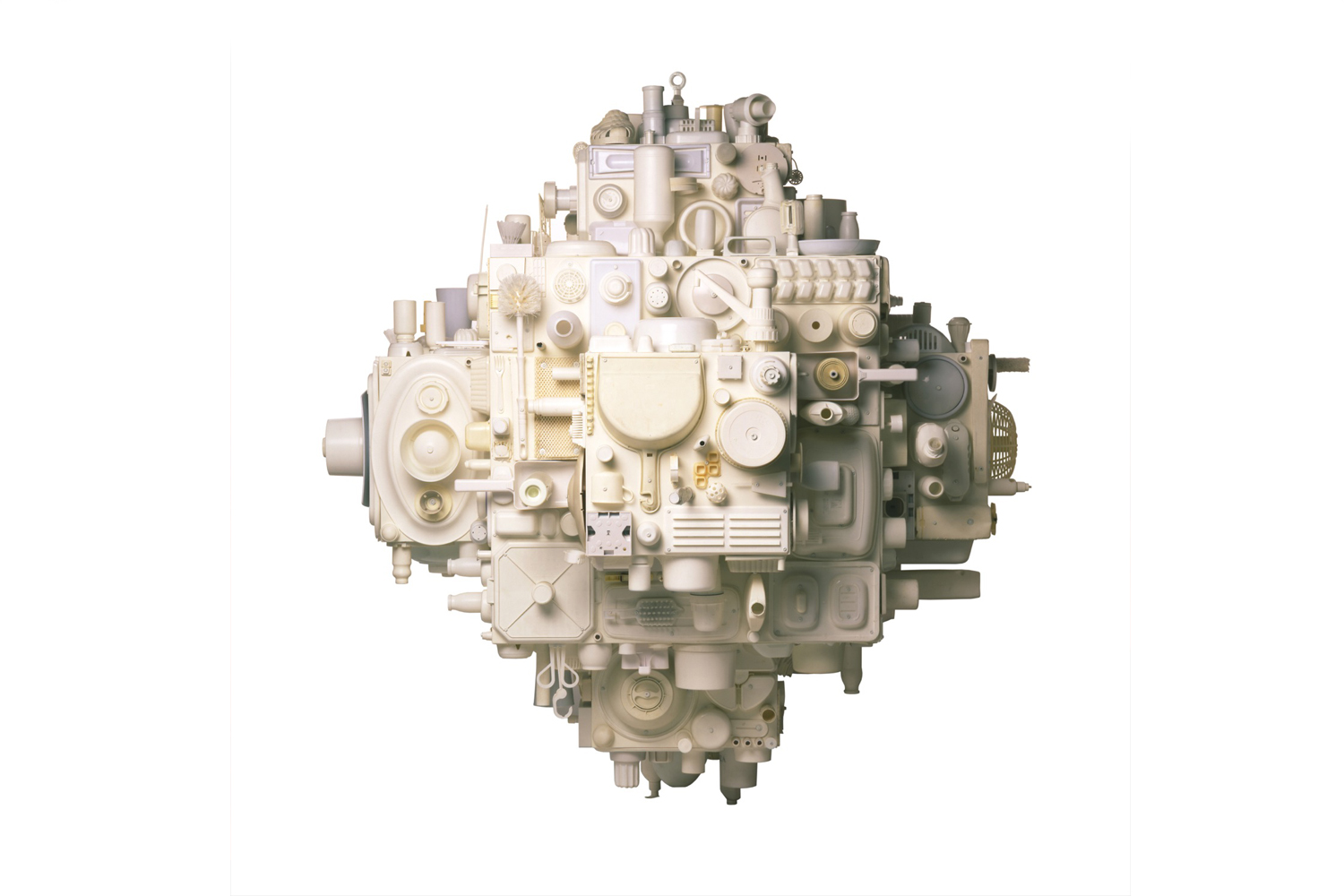
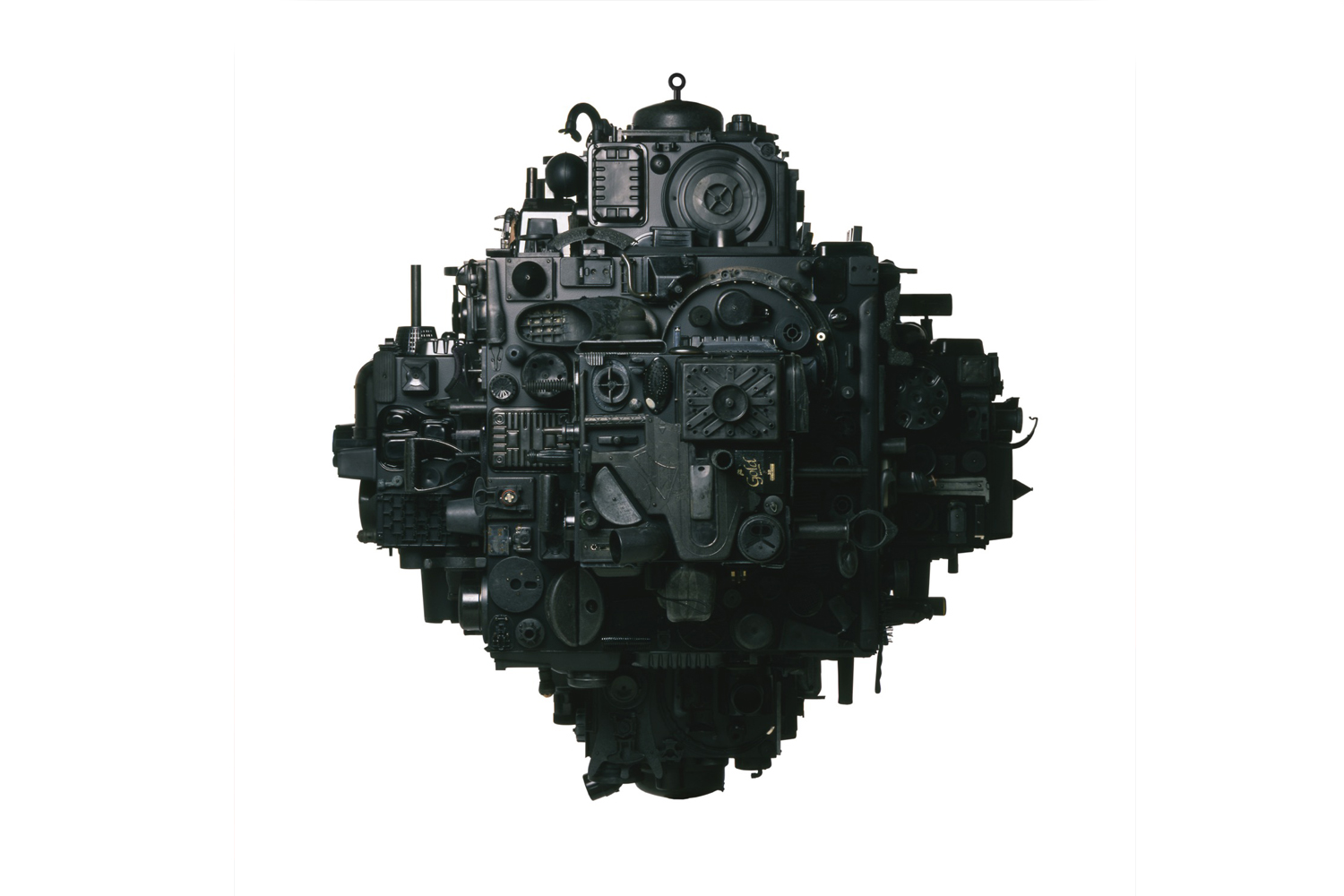
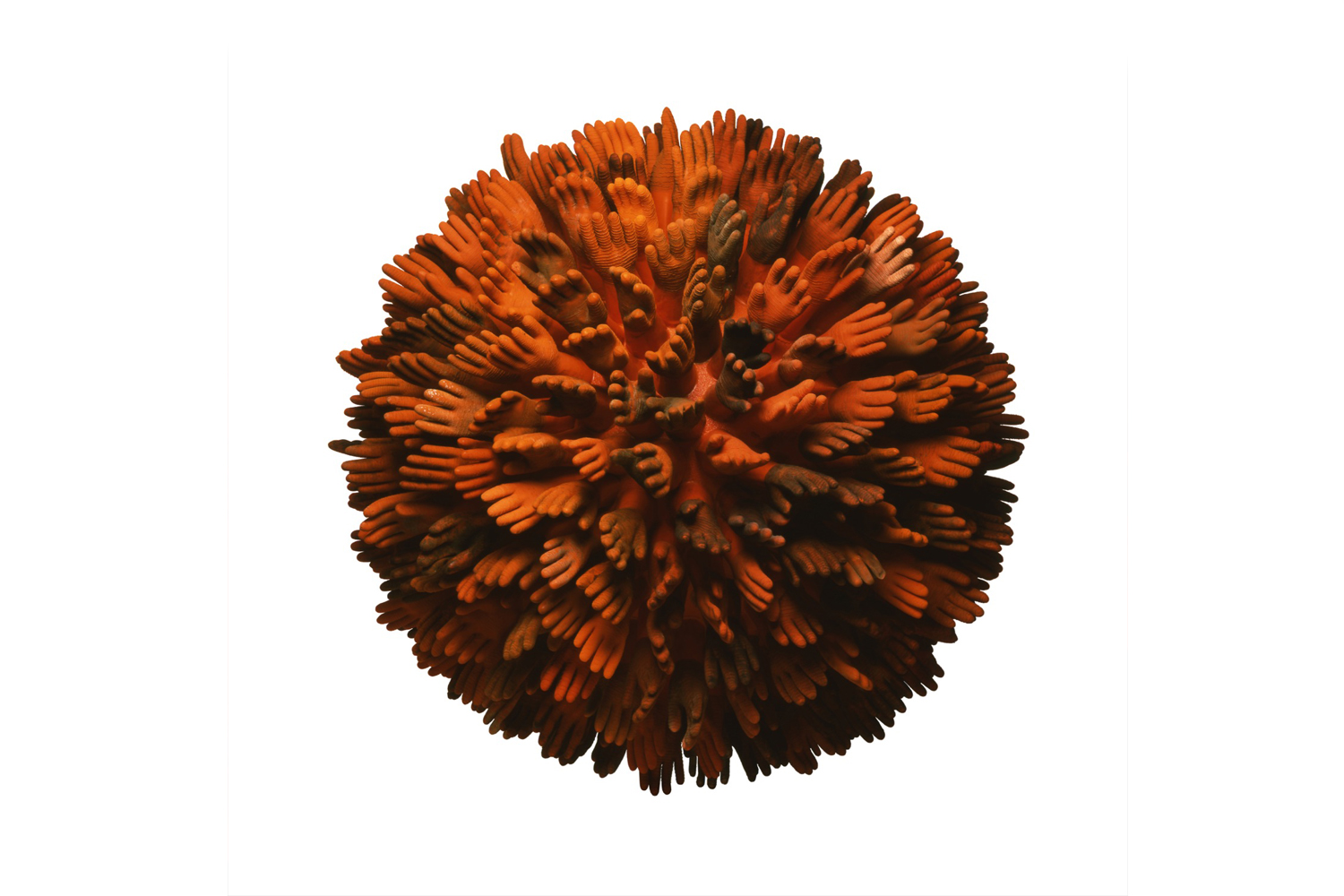
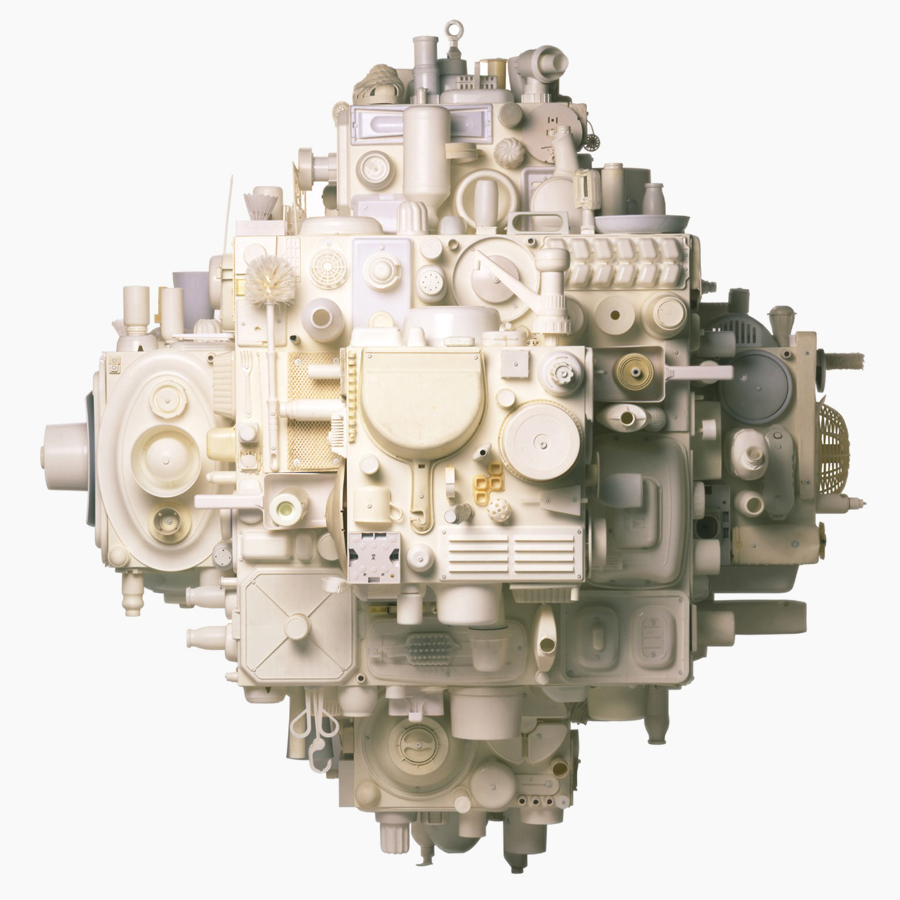
The three sculptural works Barnacle (Black), Barnacle (White), and Harpon 321 were commissioned by Selfridges as part of the store’s “Storm Project,” a thematic exploration of windswept, atmospheric coastlines. These works originated from a substantial archive of man-made debris that I collected over many years along the wild shingle beaches of Dungeness on the Kent coast. For the two Barnacle sculptures, the found materials were classified according to colour, while Harpon 321 centres on a specific object: a widely used rubber fishing glove.
The title Barnacle refers to the marine shellfish that attach themselves in clusters to ship hulls, harbour walls, and exposed rocks. In these sculptures, plastic objects take the place of these resilient organisms, adhering to a large, three-dimensional star-shaped armature. The structure itself draws on the sinister geometry of Second World War naval depth charges—spiked, floating mines that drifted at sea until colliding with the hull of an unsuspecting vessel. By merging the form of a military weapon with the quiet persistence of barnacle growth, the sculptures create an unsettling tension between threat and natural adaptation, violence and survival.
Harpon 321 takes its name from a bright orange rubber glove favoured by fishermen for its robustness and protective grip. Discovering these stray gloves washed ashore always provokes a moment of narrative speculation—what circumstances led to its separation from the person who once wore it? Though identical at manufacture, each glove undergoes its own transformation at sea, accumulating stains, scars, and subtle distortions. In the sculpture, the gloves radiate outward, mimicking the hardy vegetation that grows across the Dungeness landscape or resembling exotic sea urchins with soft, tentacle-like spines. They appear simultaneously anthropomorphic and creaturely, evoking both human presence and marine life.
All three sculptures were installed on slow-moving rotators within the Selfridges window displays. This continuous, gentle rotation animated the works, allowing viewers to experience the shifting silhouettes and textures as if the pieces themselves were drifting in water or turning in a tidal current. Through the repurposing of coastal debris, the works reflect on the complex relationship between the ocean and human industry—how discarded objects move, transform, and eventually become part of a new, unintended ecology.