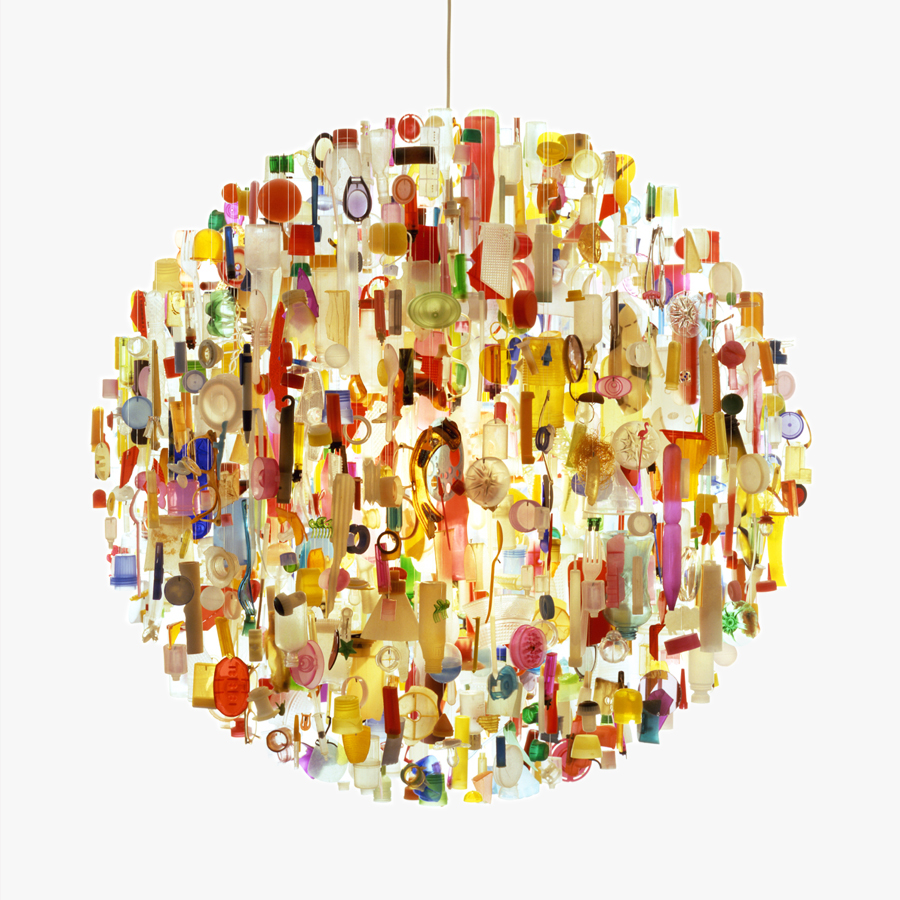
Tide (2005)

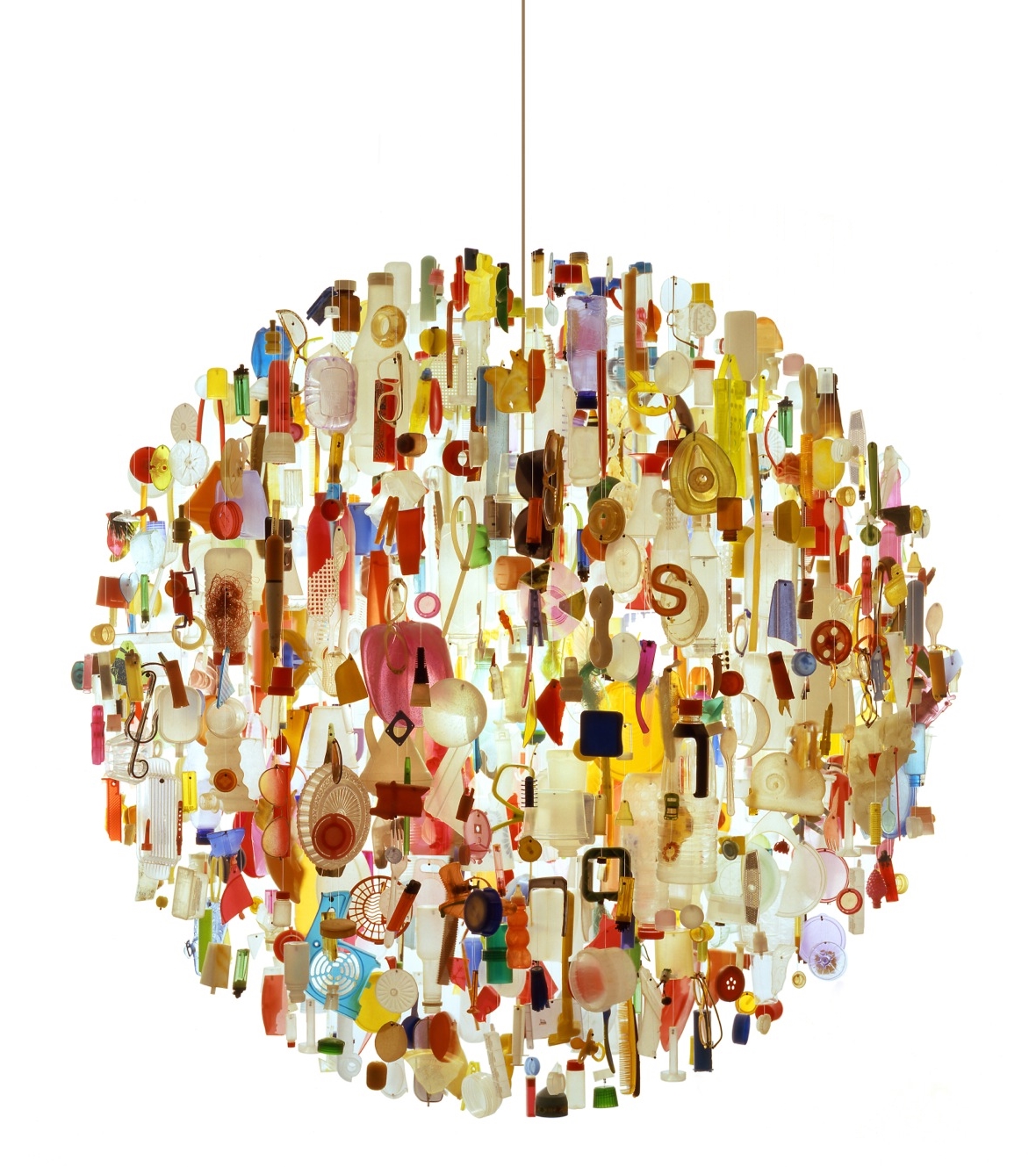
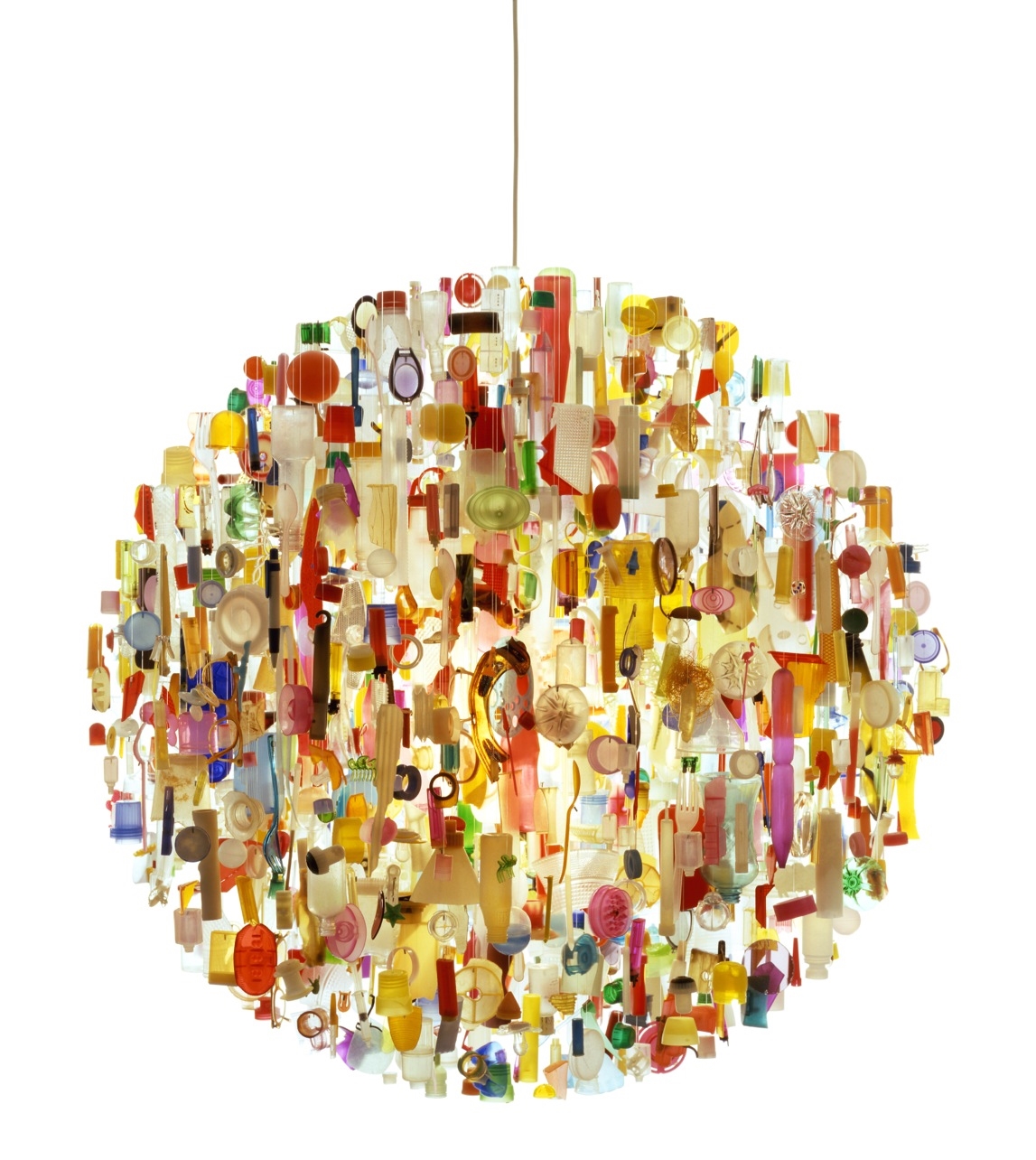
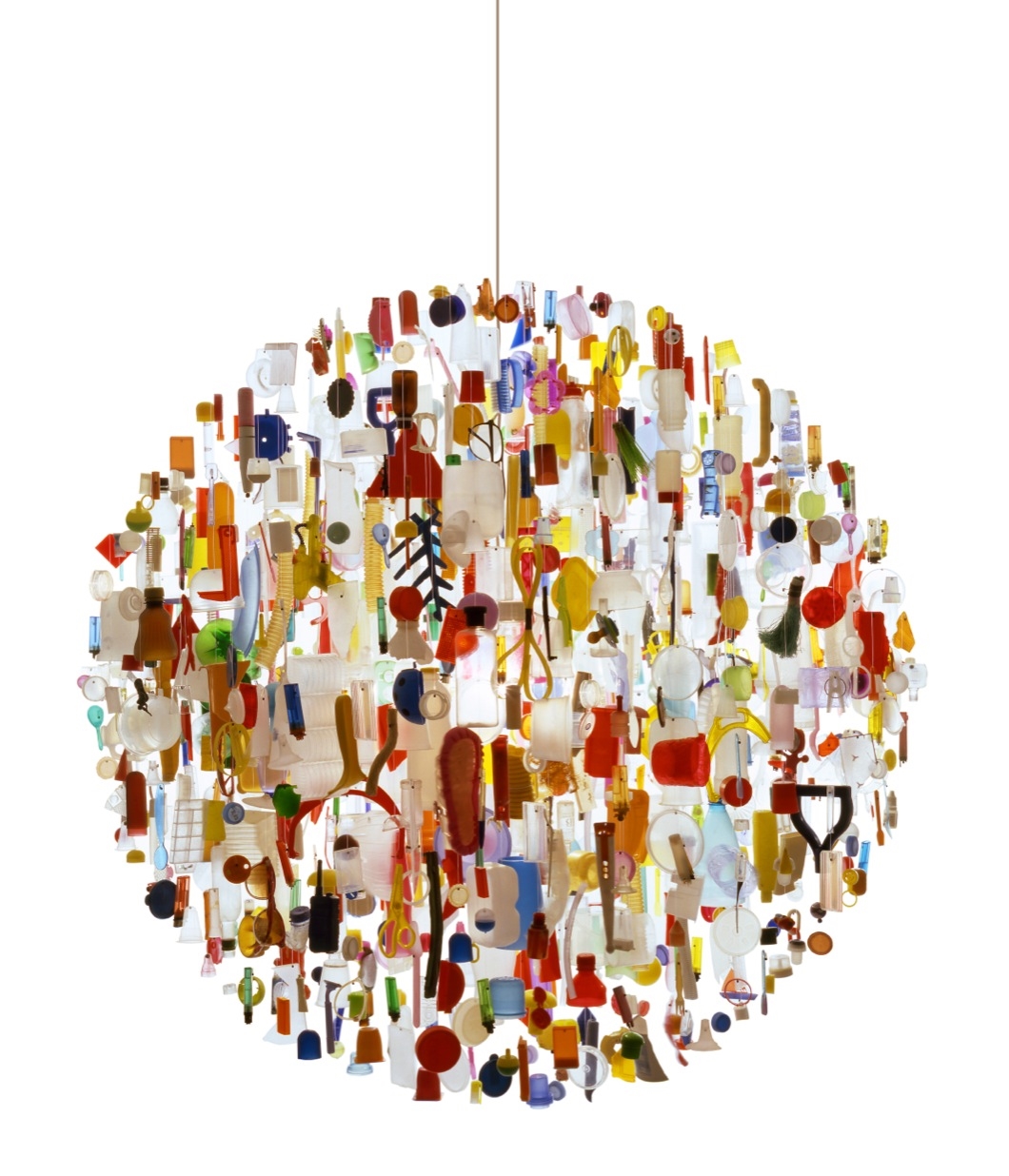
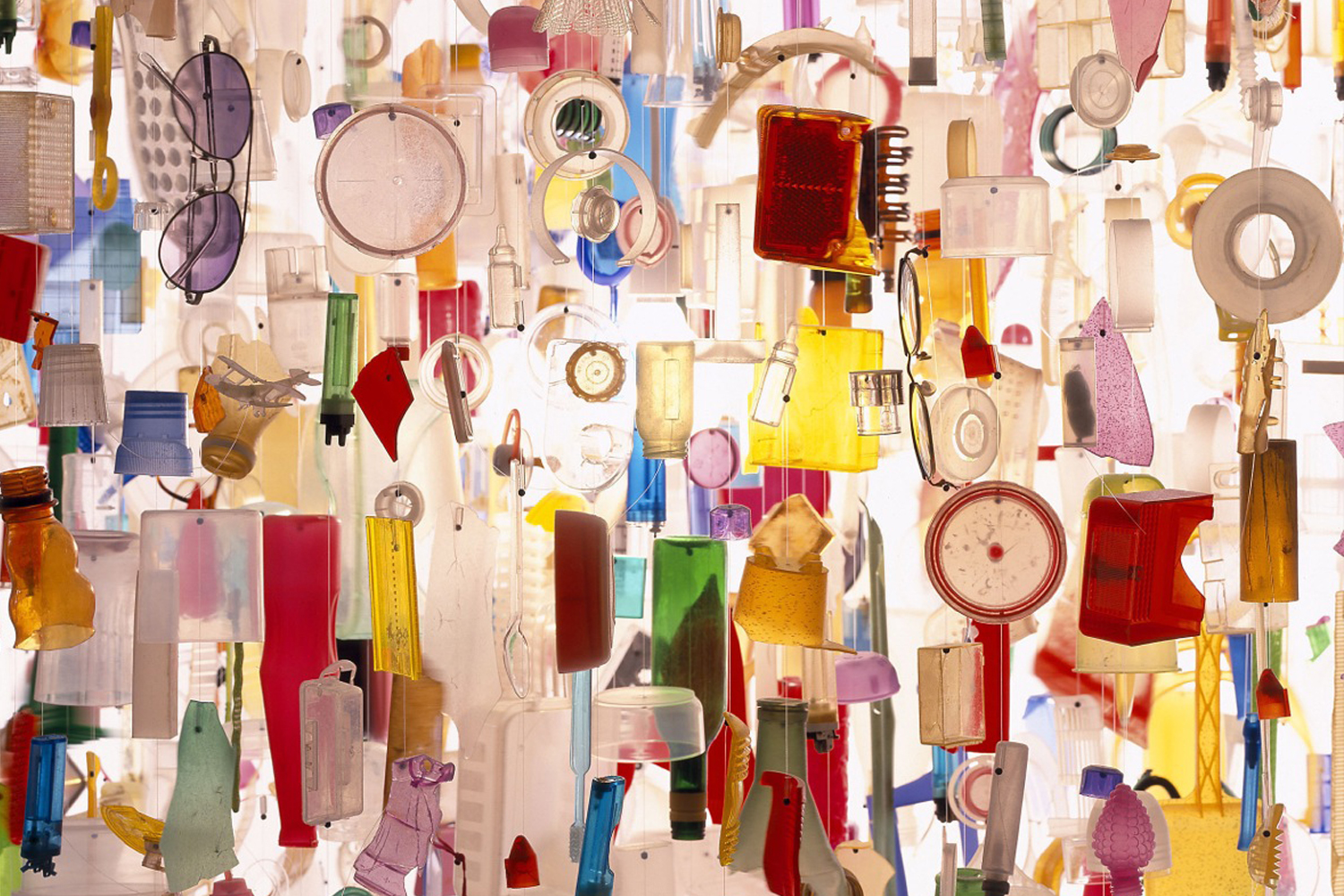
The original Tide chandelier emerged from a long-term project centred on collecting “man-made” debris washed ashore on a stretch of the Kent coastline at Dungeness. Over several years, I walked this isolated landscape, gathering fragments of the modern world—objects shaped by industry, weathered by saltwater, and returned unexpectedly to land. Eventually, this growing archive of materials was sorted, studied, and categorised, forming the basis for a series of individual artworks. As the project evolved and demand increased, my collecting routes broadened to include much of the British south coast and portions of the Dutch coastline, revealing strikingly similar patterns of pollution across national borders.
The Tide chandelier is composed of clear and translucent objects of varying colours, most of them plastics produced for everyday use. Each item carries its own history of manufacture, use, loss, and oceanic transformation. Though no two pieces are alike in shape, scale, or origin, they are brought together to form a single, unified sphere. This spherical form deliberately echoes the moon—the celestial force that drives the tides responsible for washing these objects ashore. In this way, the work becomes a collaboration between human activity and natural movement.
The chandelier invites multiple readings. On one hand, it can be seen as a shimmering celebration of modern manufacturing: a constellation of mass-produced forms elevated through arrangement and illumination. On the other, it stands as a sobering display of environmental neglect, a testament to the volume of waste casually abandoned to the sea. These opposing interpretations coexist, both rooted in human behaviour—our inventiveness, our consumption, and our impact on the natural world.