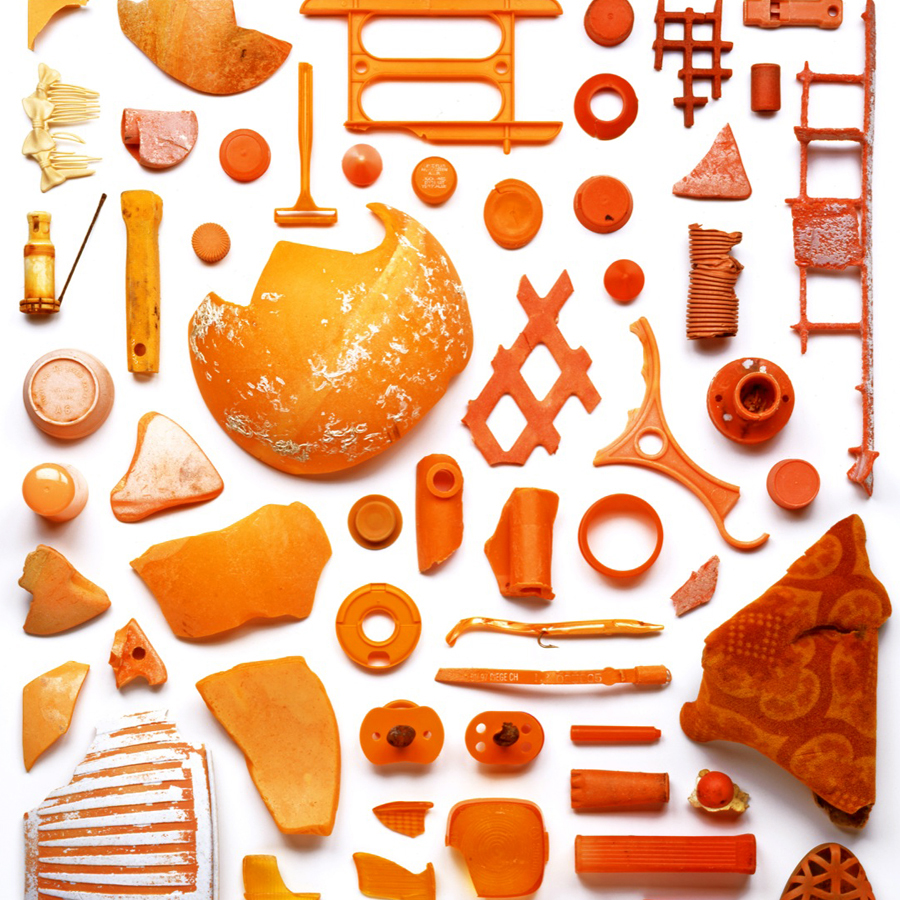
Tide Mark (2004)
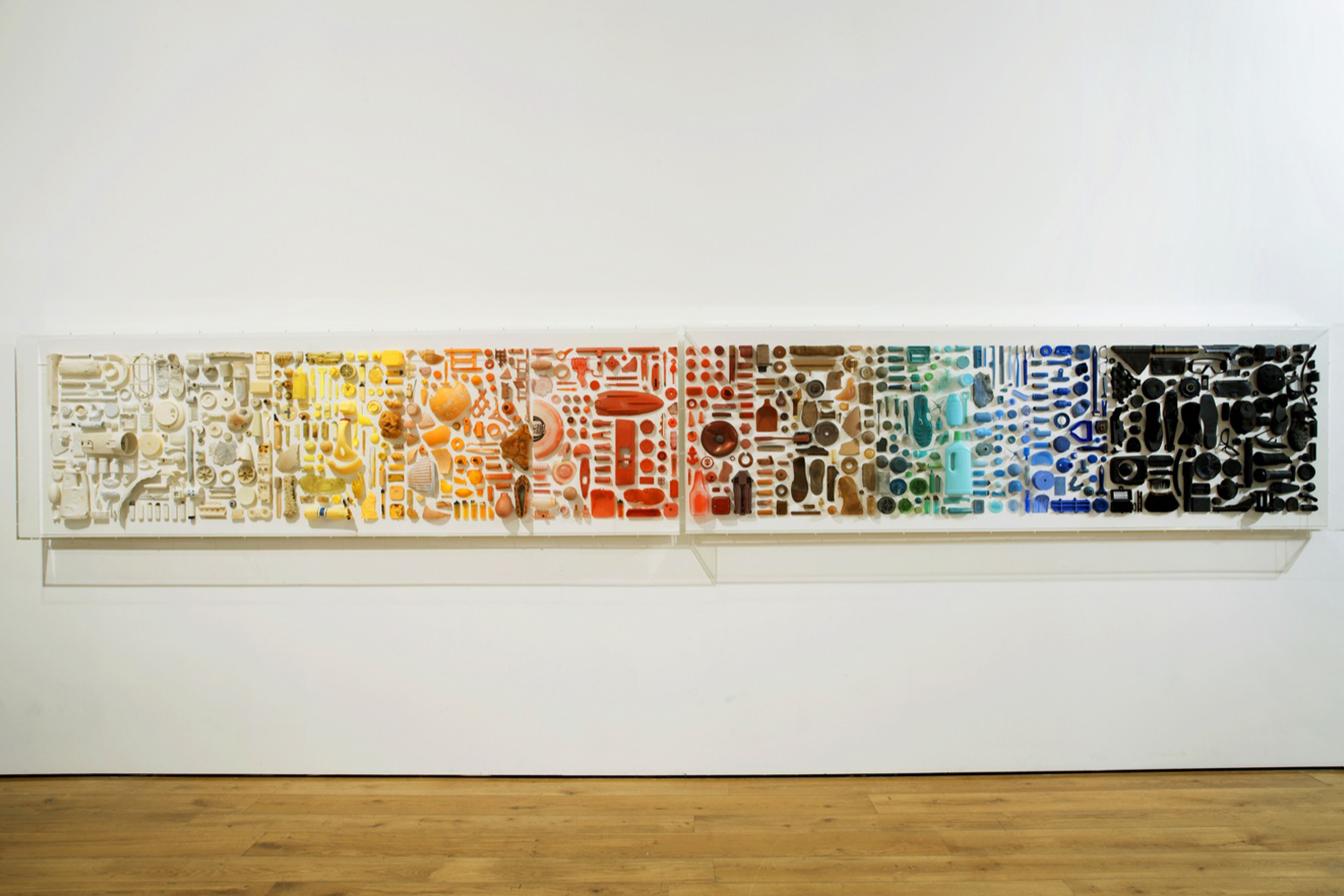
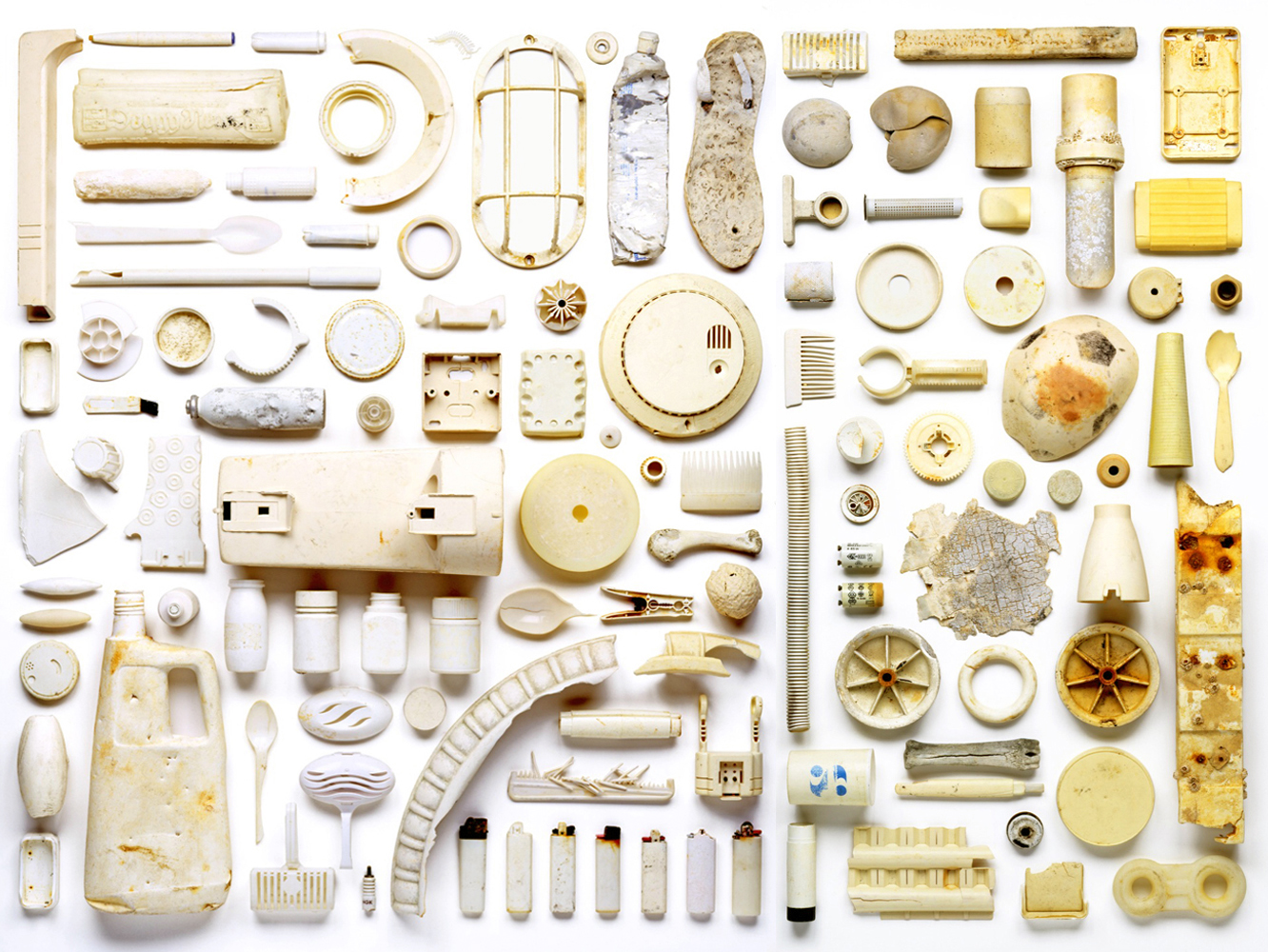
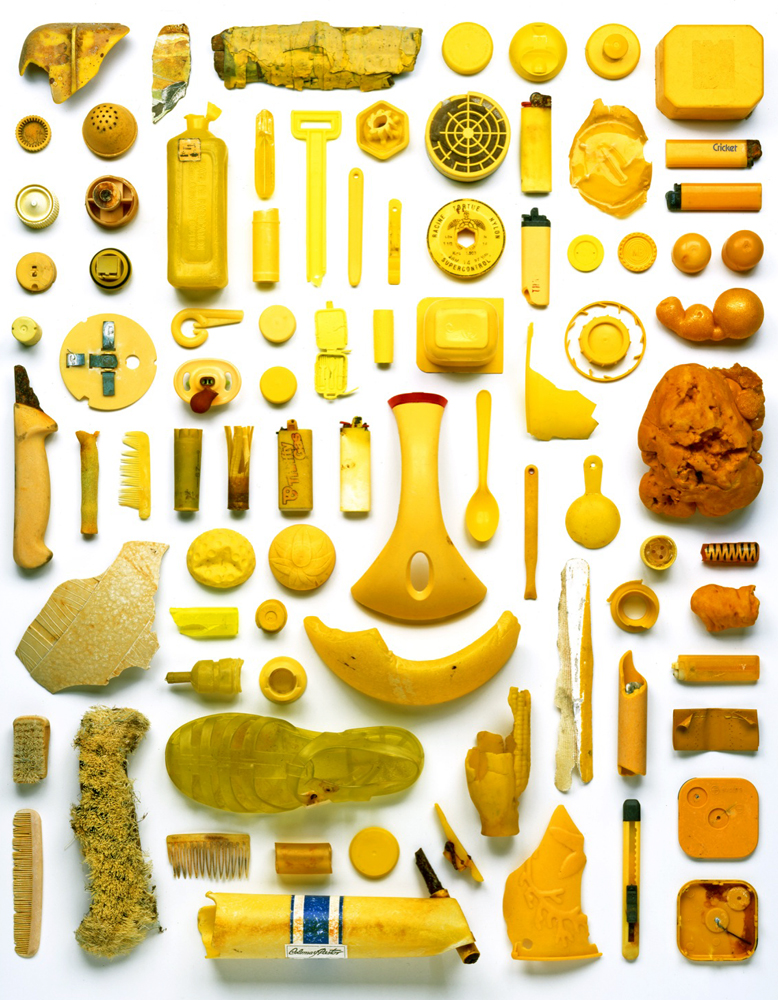
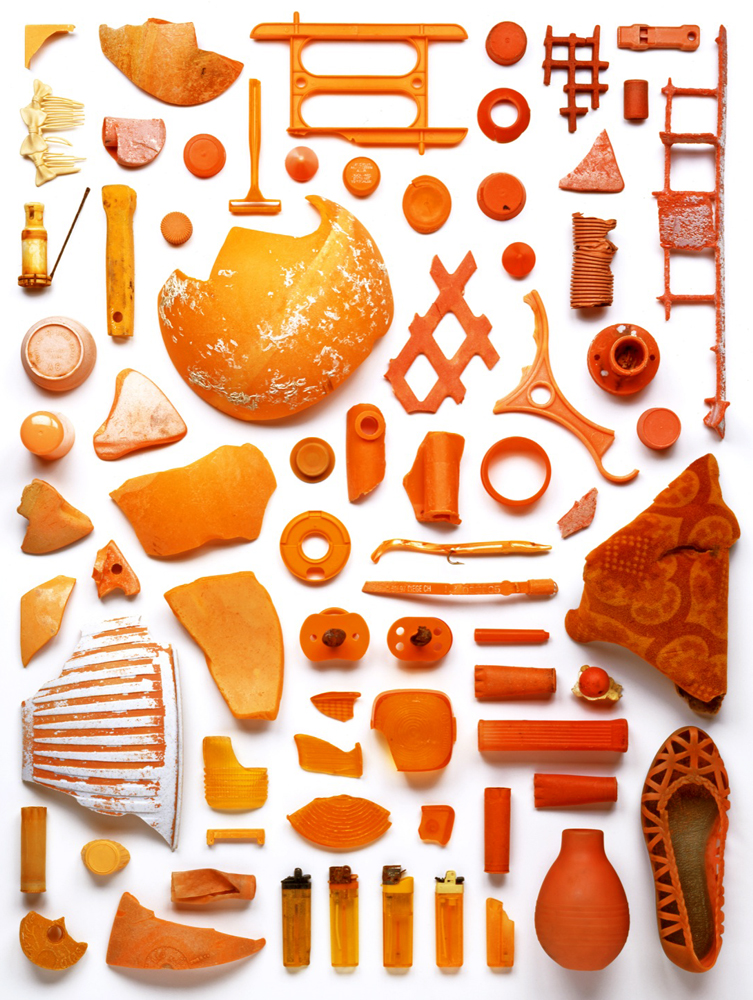
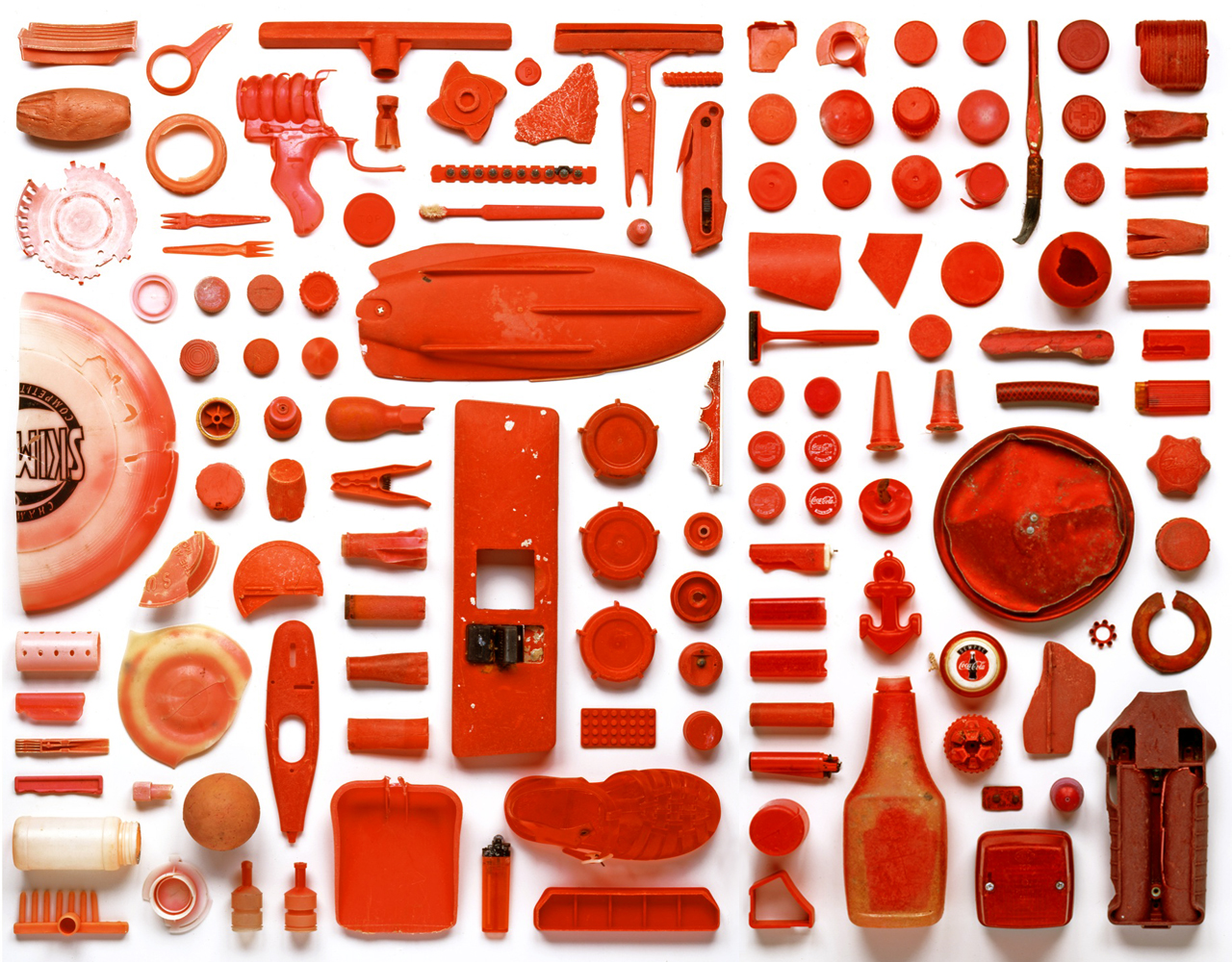
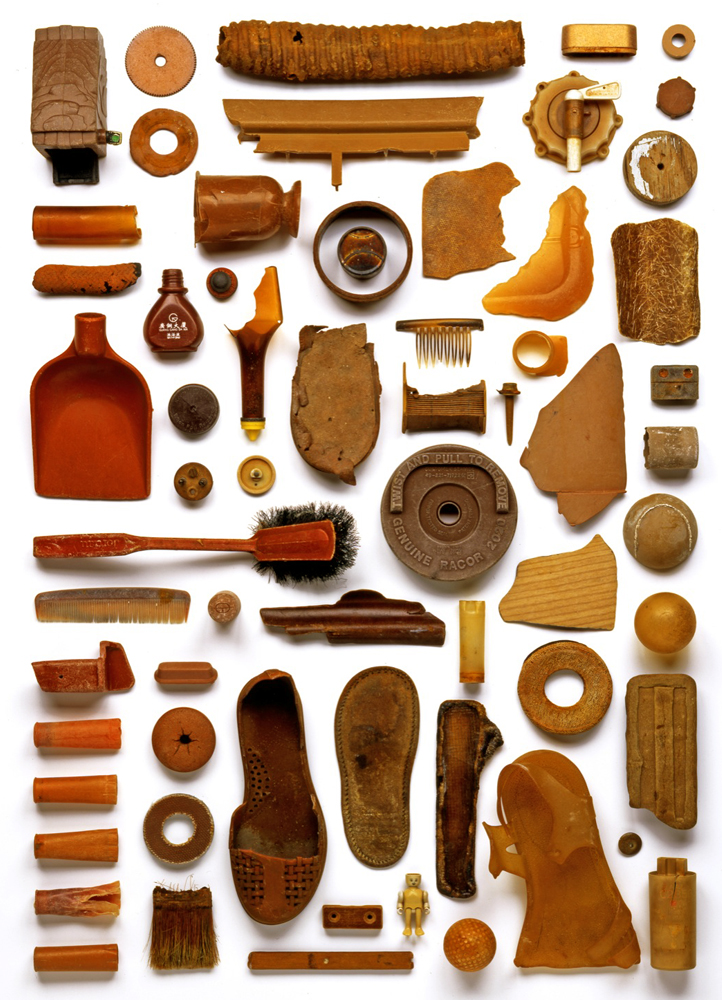

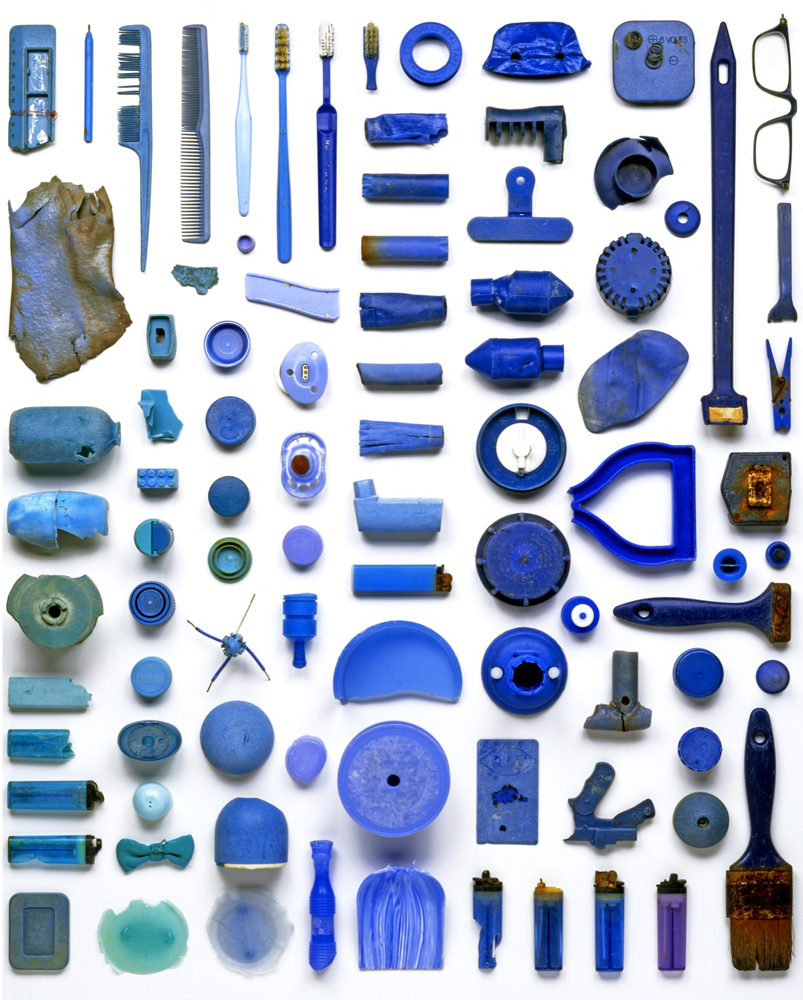
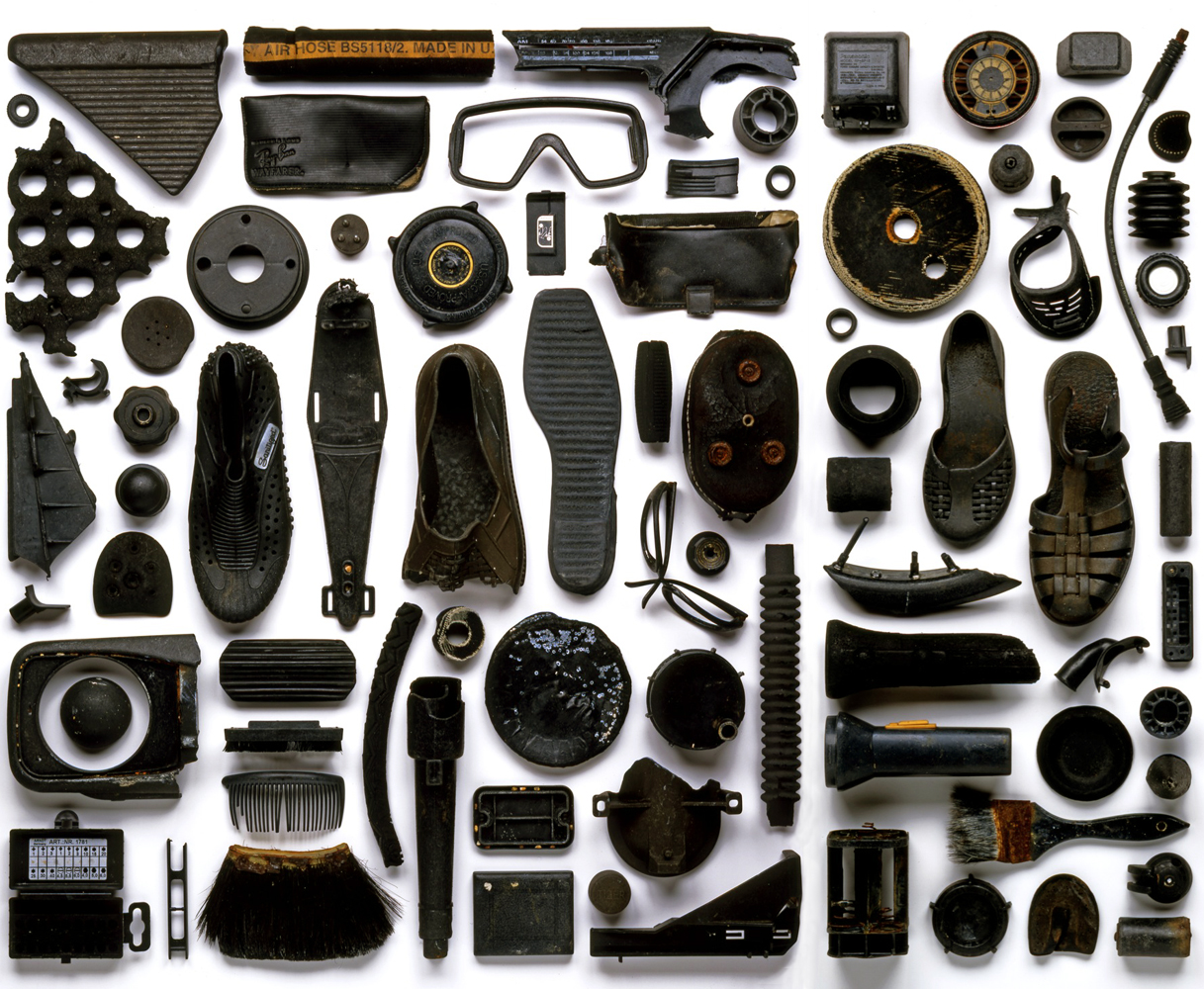
Tide Mark emerged from a multi-year process of collecting discarded man-made objects along a single stretch of the Dungeness coastline in Kent. Walking the same route repeatedly, I followed the shifting boundary where the sea’s debris gathers—the tide mark—an ever-changing line of seaweed, salt-stained remnants, and fragments of human activity washed ashore. I was not only interested in the material presence of these objects but the way the sea had worked upon them: colours bleached or intensified, surfaces eroded, plastics warped, and textures altered by constant friction with water, sand, and wind.
Once mass-produced and functional, these objects reached me in a state of material exhaustion. They had completed their usefulness in the human world and entered a new phase shaped entirely by environmental forces. By carefully sorting the fragments by colour and arranging them into a six-metre continuum—from white through the full chromatic range to black—I sought to create a sculptural ‘tide mark’ that reflects both the natural sorting of the shoreline and the artificial palette of contemporary waste.
The collection was first photographed by specific colour sections ,then digitally assembled into a linear composition. In 2009, the actual objects were re-formed into the same sequence and presented in two wall-mounted Perspex vitrines, each three metres in length. This physical installation preserves the fragile tension between environmental transformation and human categorisation, allowing viewers to encounter the debris as both archaeological evidence and aesthetic material.