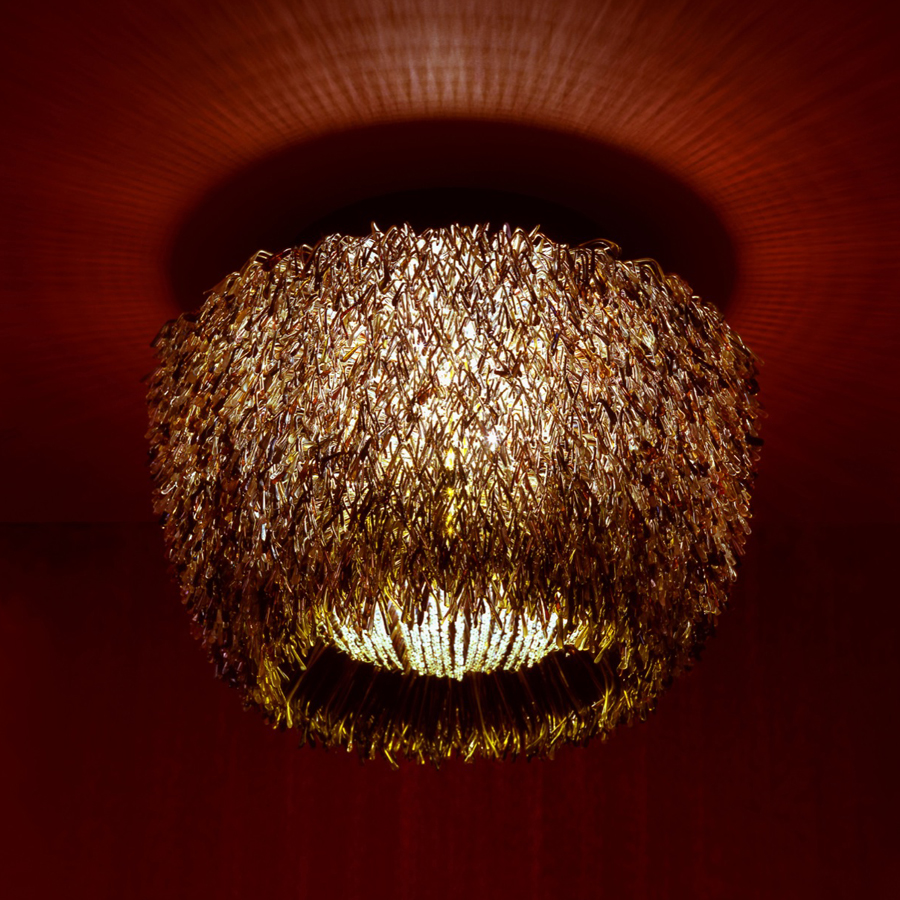
Urchin (2009)
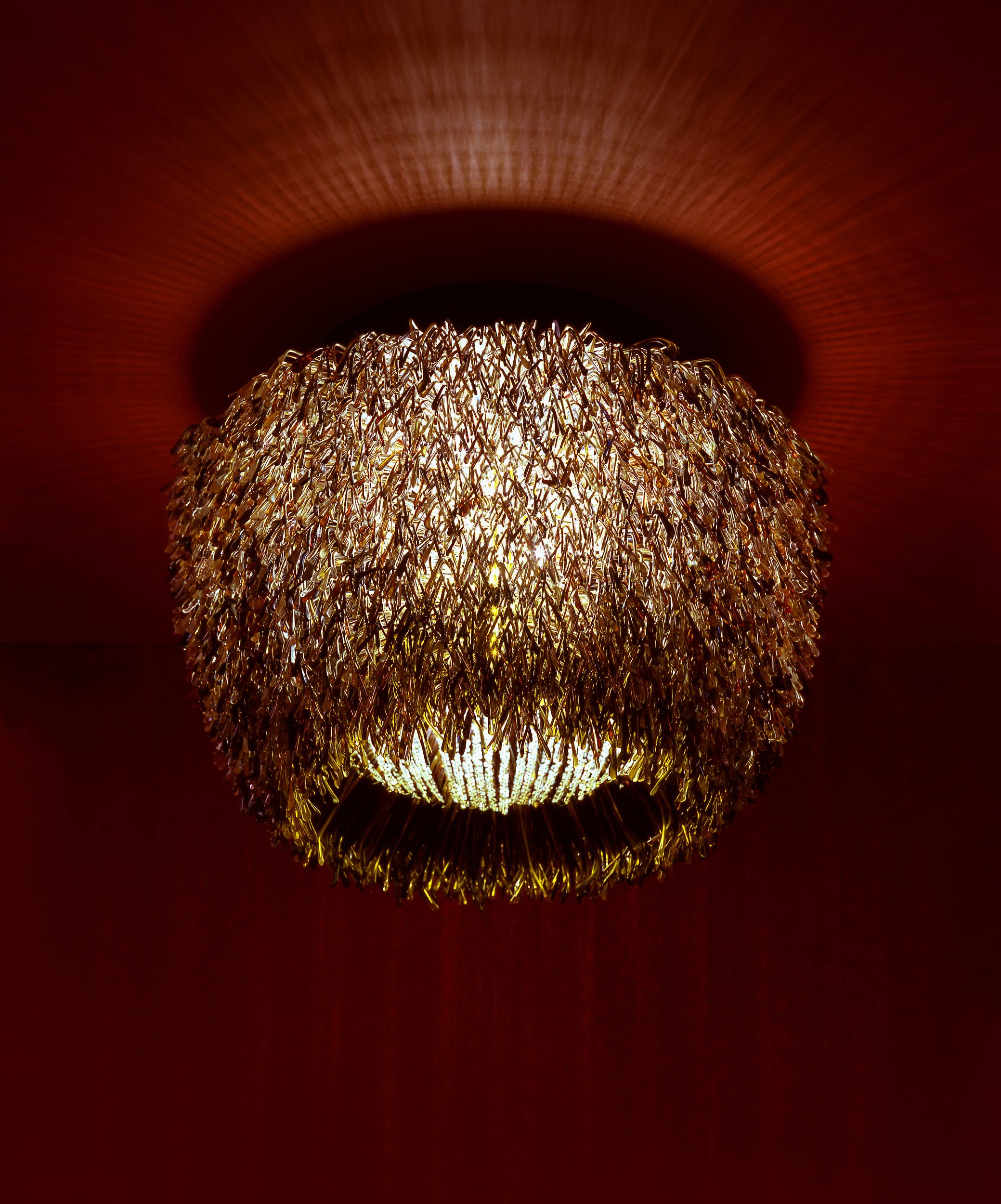
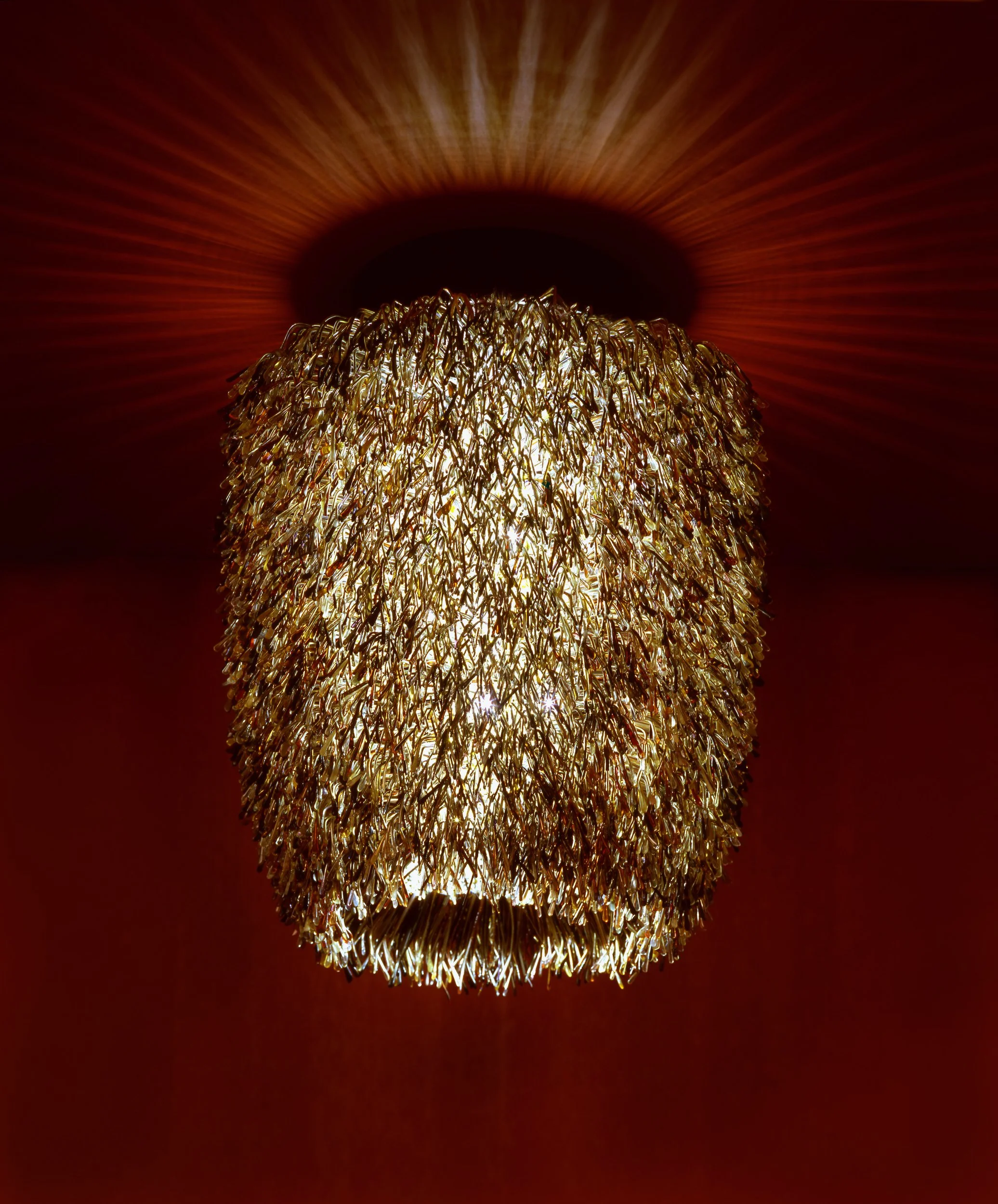
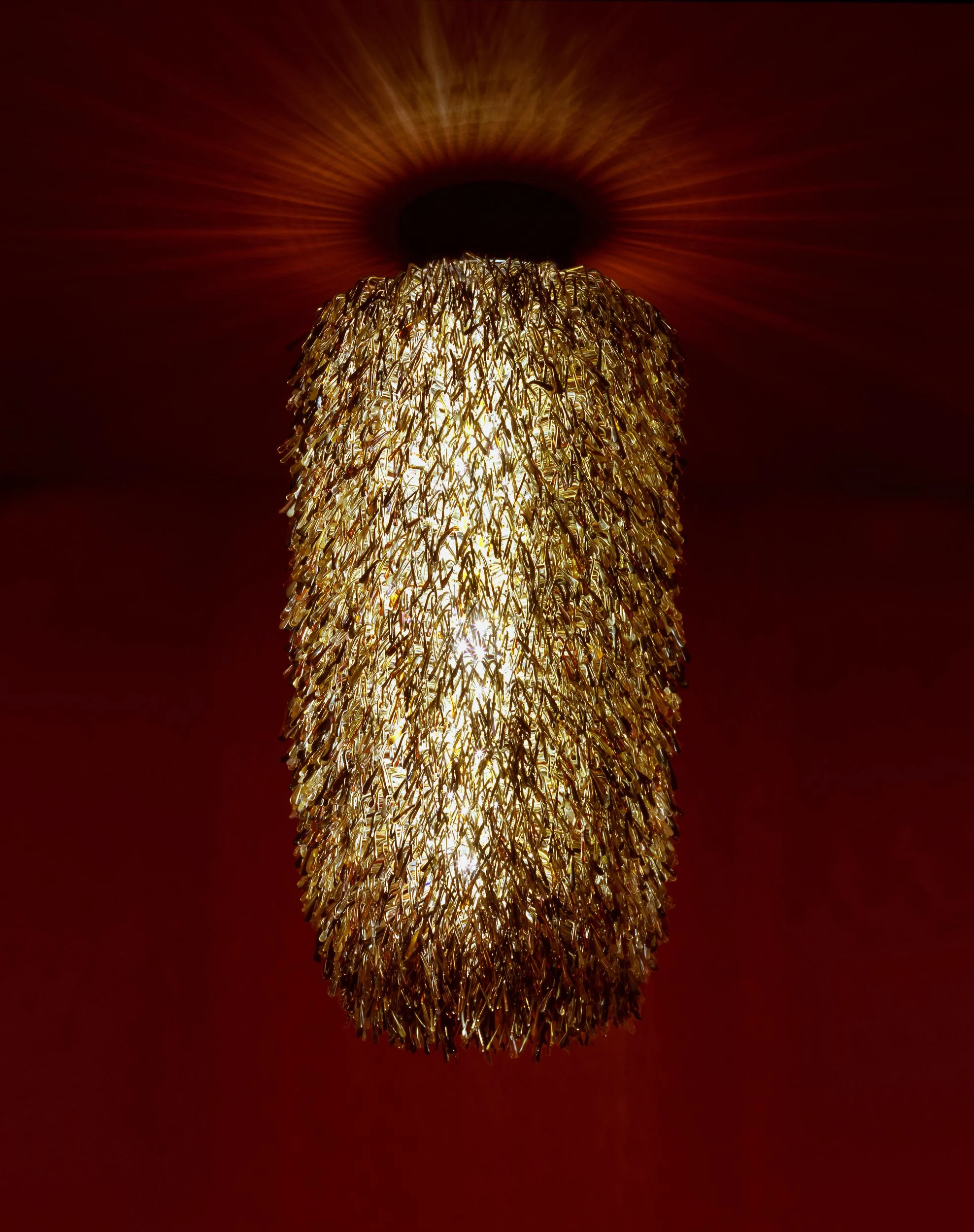
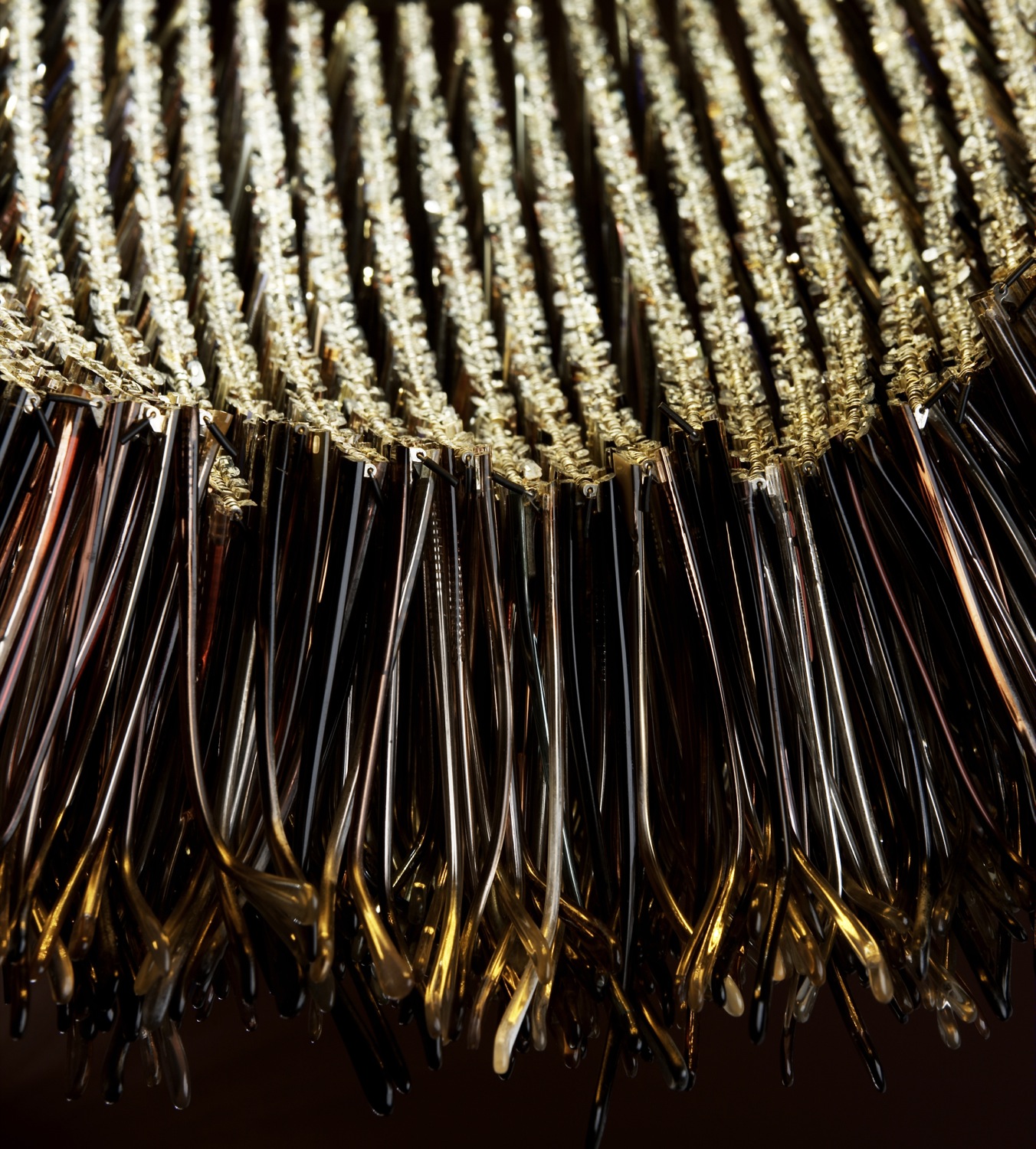
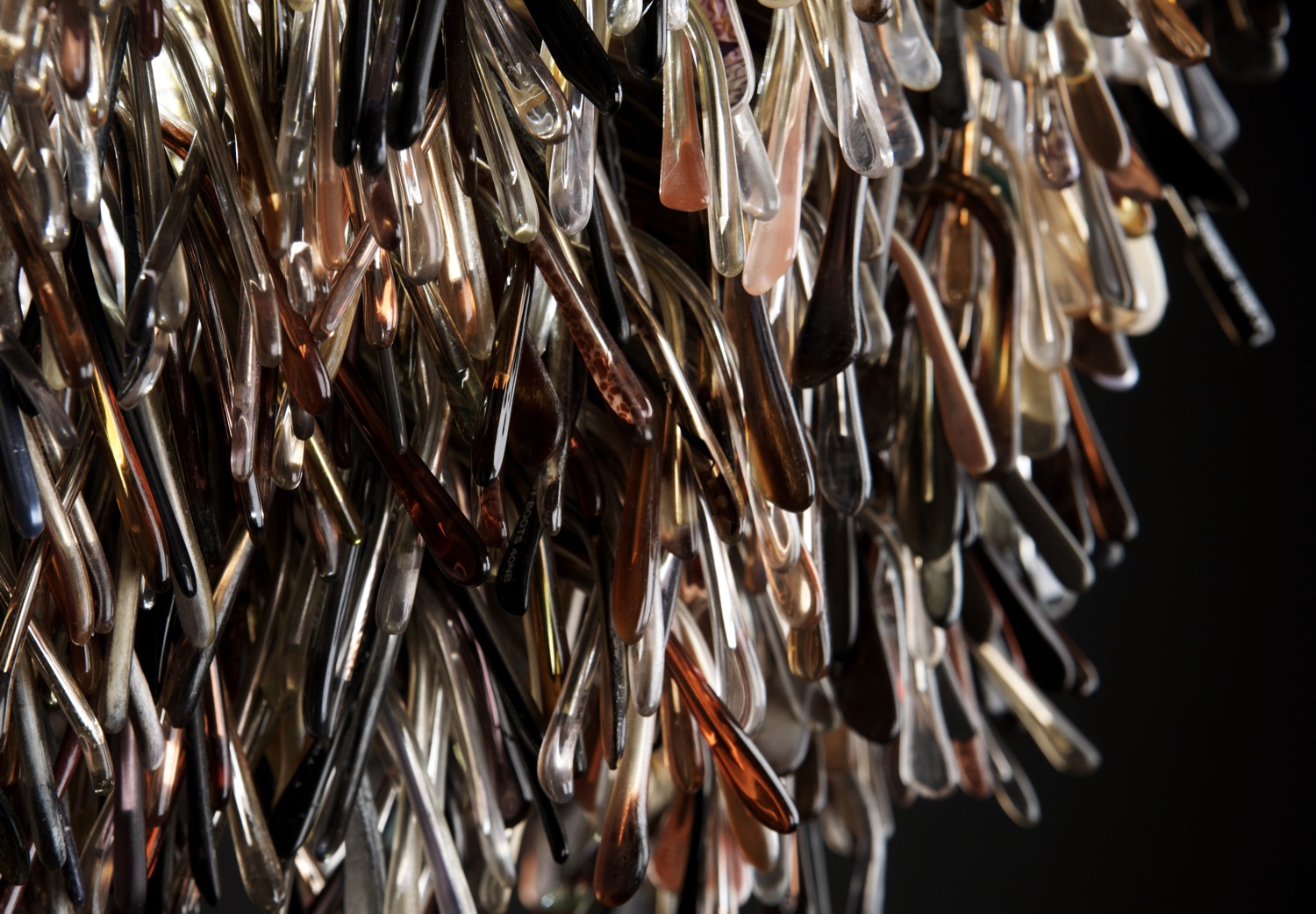
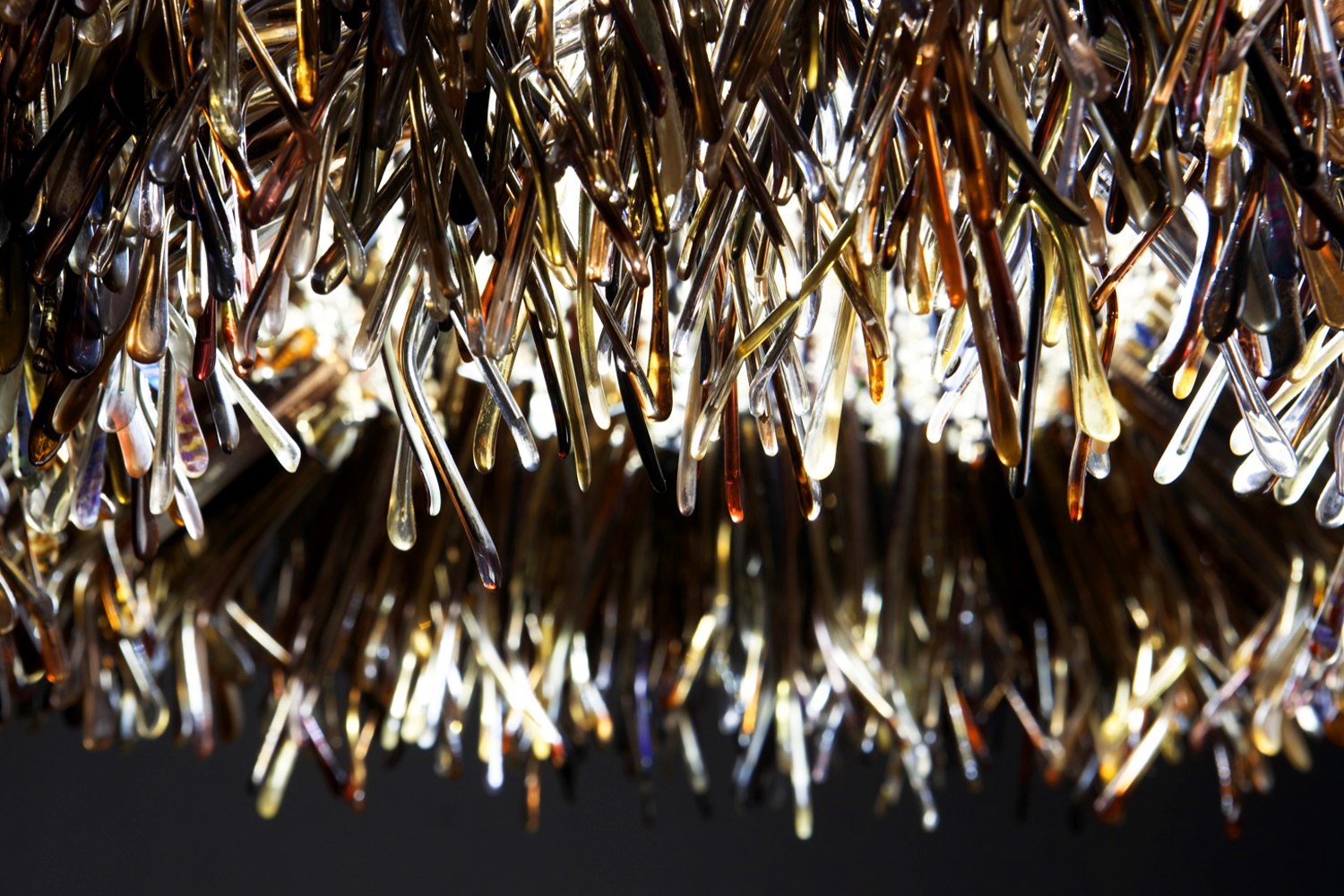

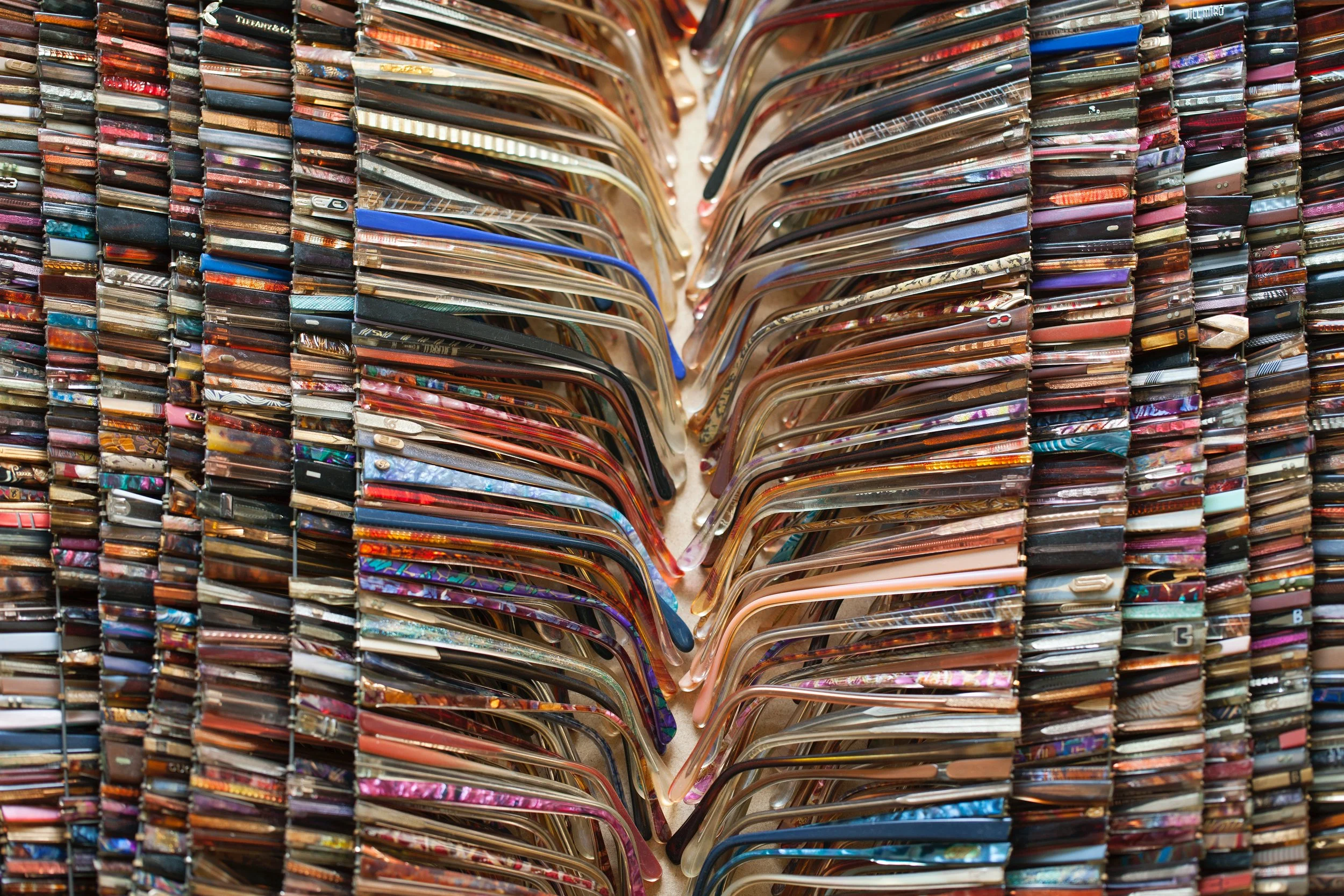
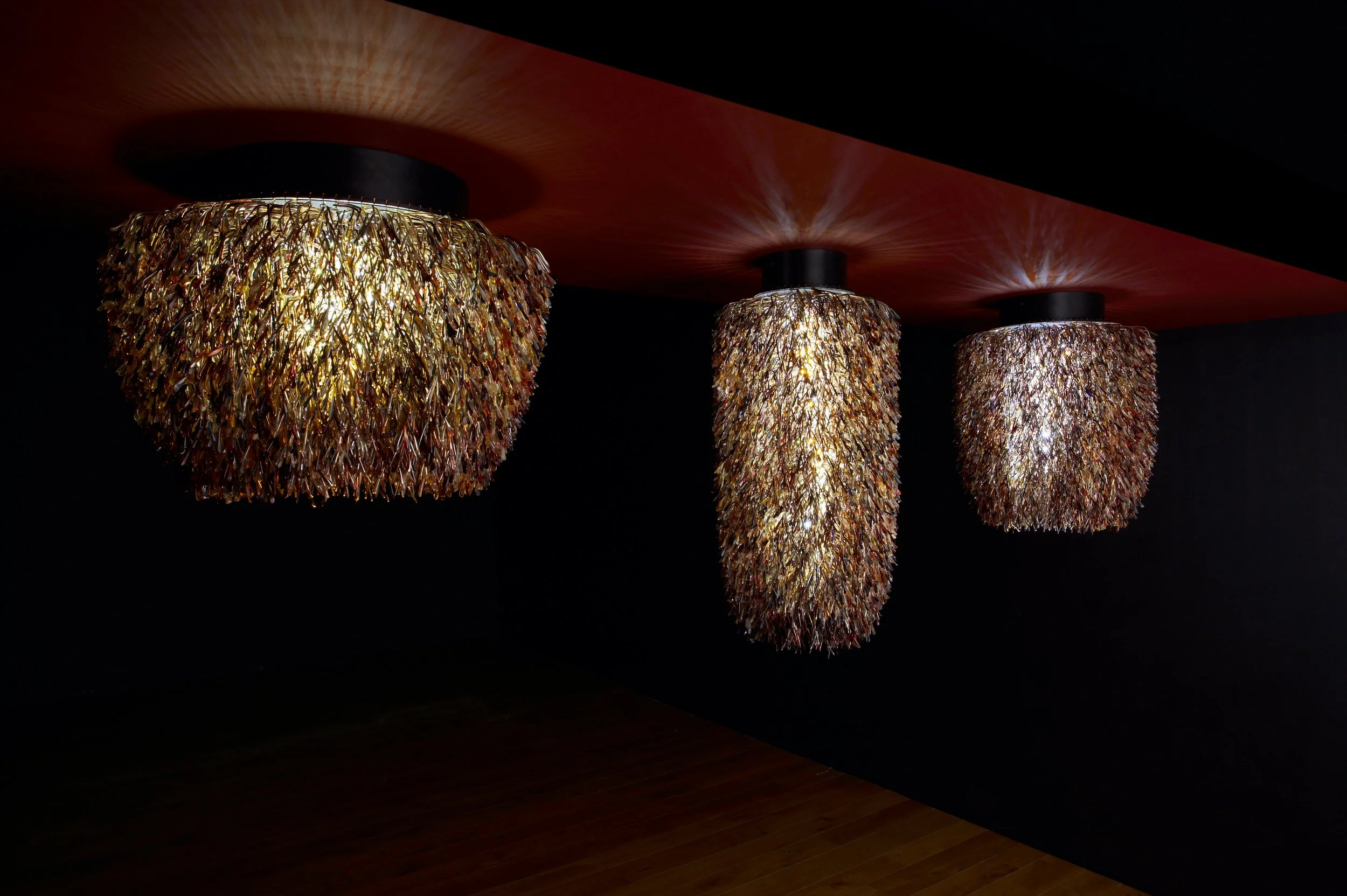
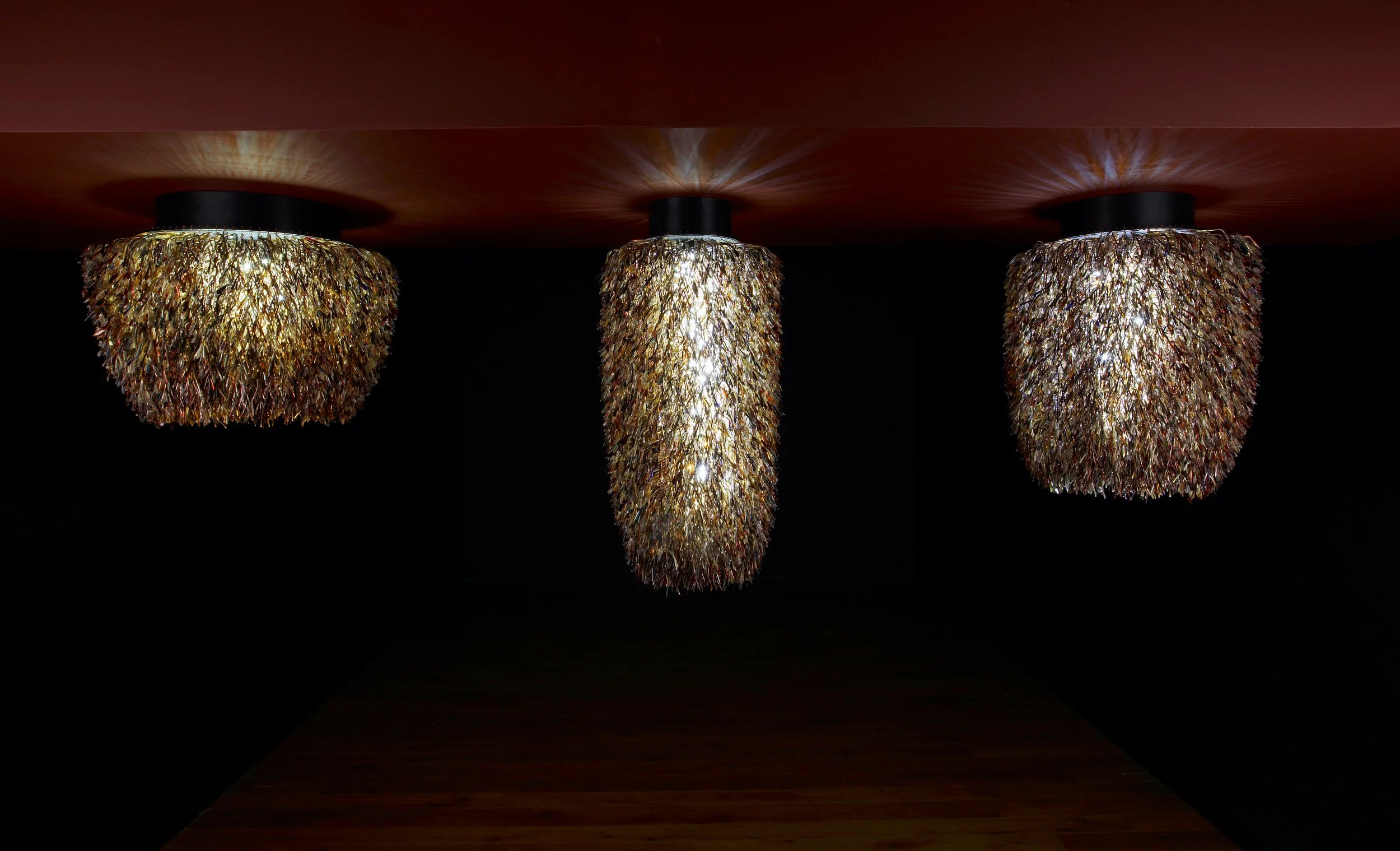
The final remaining component of the spectacle that I had yet to explore in my practice was the arm. Just as a butcher finds purpose for every part of an animal, leaving nothing unused, I felt compelled to work with the boxes of spectacle arms accumulating in my studio. Their slender, articulated forms intrigued me—objects that, unlike lenses, relate less to the eye and more intimately to the ears, to the act of holding vision in place.
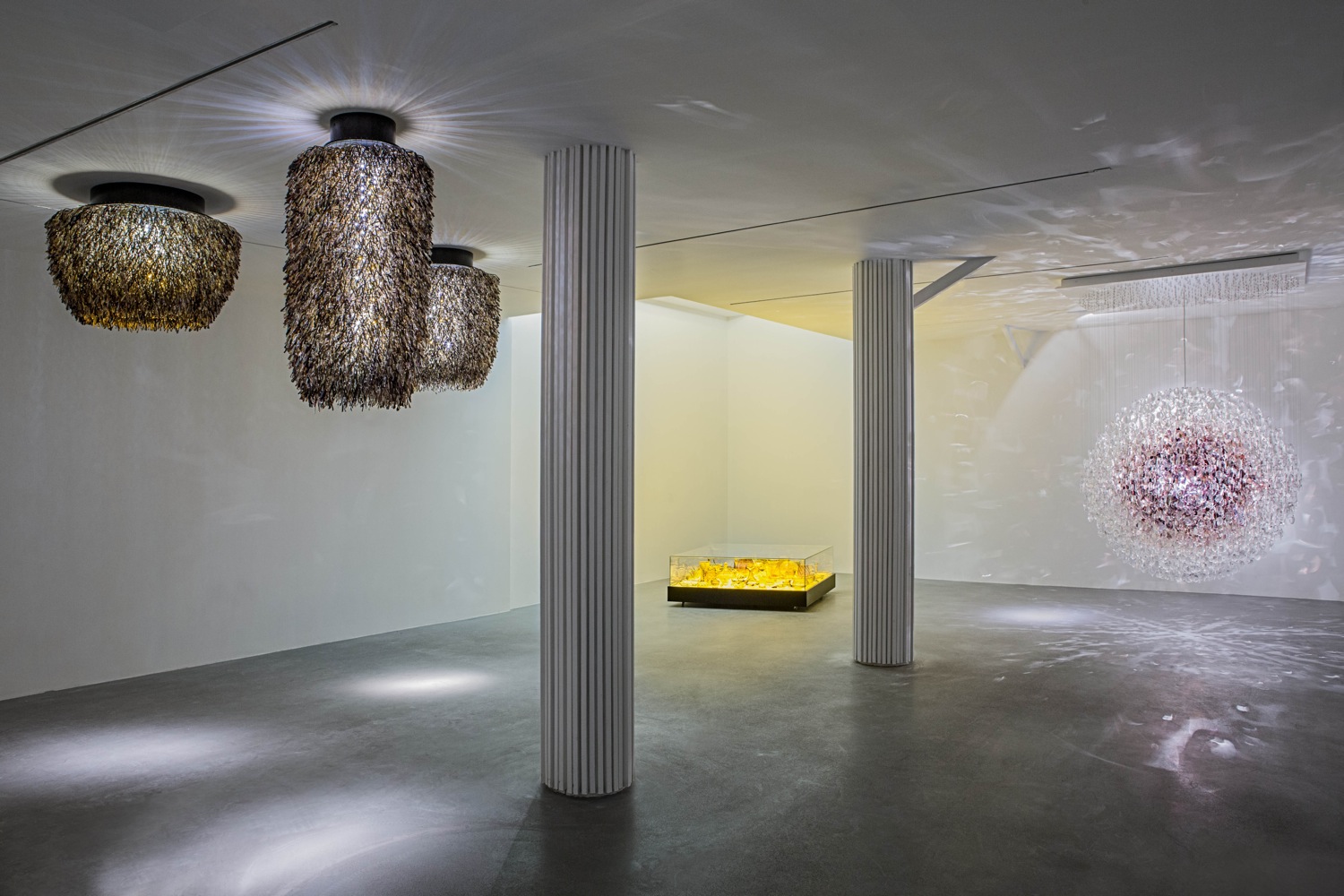
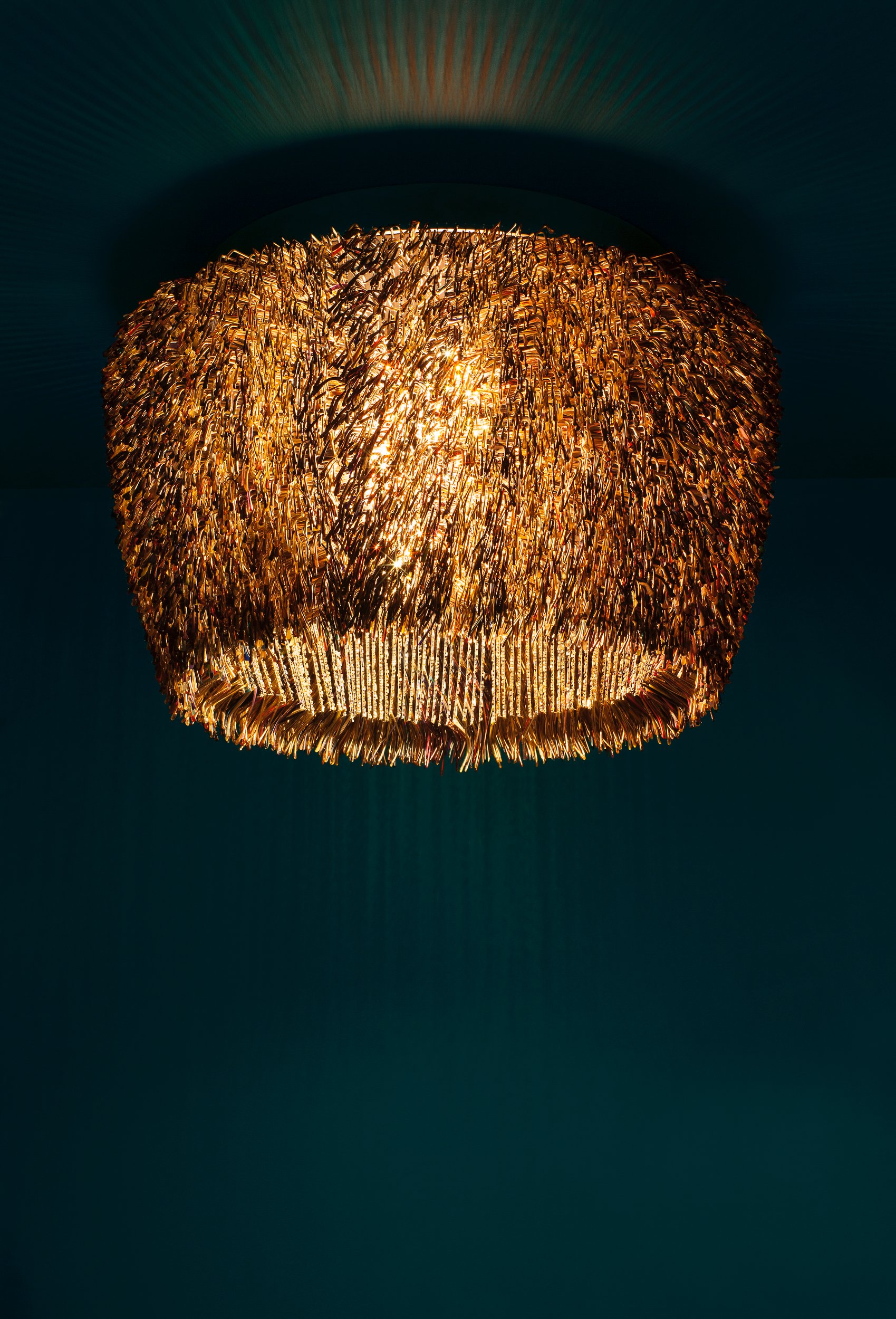
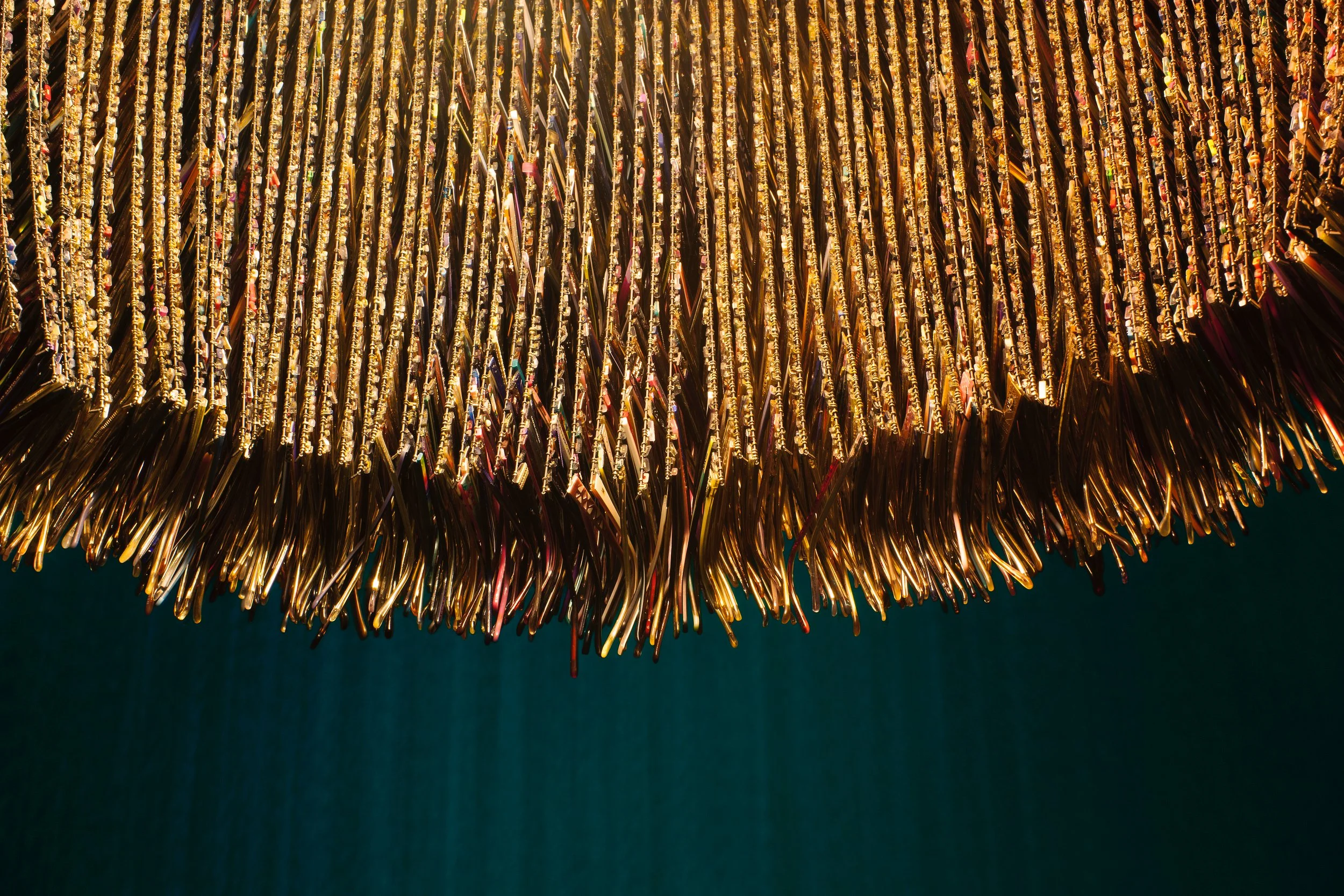
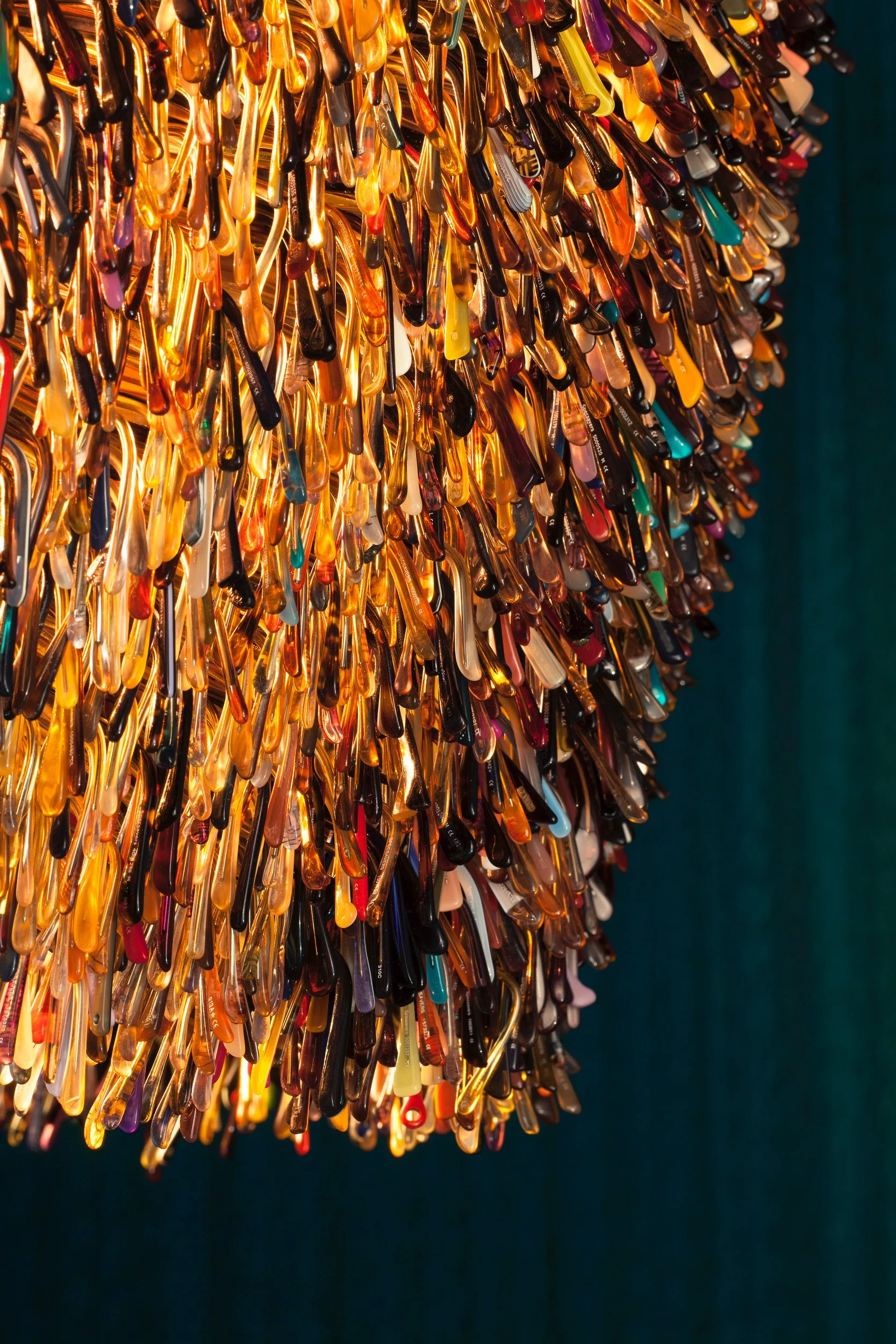
These ceiling lights emerge from thousands of carefully selected arms linked together, creating three individual sculptural forms. Their 'shaggy,' organic presence derives from the dense accumulation of these components, which together mimic the spiny architecture of sea urchins—small marine creatures whose spherical bodies are protected by a shell of radiating spines. By reconfiguring the spectacle arms into these radial forms, the work draws a parallel between biological defence structures and the human technologies that mediate perception.
Installed flush against the ceiling, the Urchins appear to cling to the surface like organisms attached to the roof of a deep-sea cave. Their integration with the architectural plane heightens the illusion that they have grown there, slowly and naturally, over time. When illuminated from within, the circular lattice of interlinked arms becomes a conduit for light: it travels through the gaps, ricochets between the overlapping elements, and disperses into the space as a mysterious, otherworldly shimmer.
The Urchins become hybrid beings—part industrial remnant, part oceanic fantasy—inviting viewers to consider how materials from human vision might evolve into new species of light.